

Industry NewsJuly 28, 2026

40 Years of PC-based Control for Automation
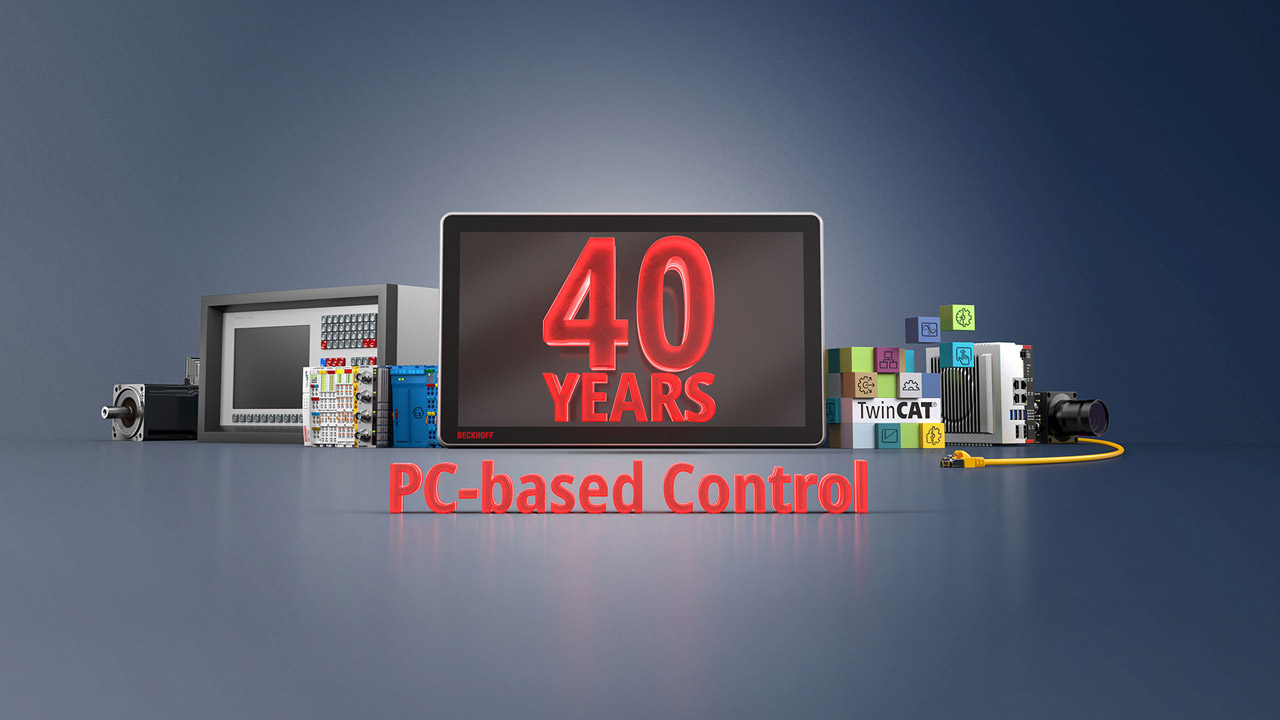
Beckhoff Celebrates 40 Years of PC-Based Control From a technological revolution in 1986 to a global standard in automation today SAVAGE, Minnesota, July 28, 2026 – When Beckhoff elevated the industrial computer to central control system status four decades ago, it was a paradigm shift in automation technology. For 40 years now, PC-based control has put the power of IT standards and Moore’s Law for integrated circuits directly into the hands of machine builders and automation engineers. By bundling PLC, motion control, and technologies such as measurement technology, robotics, and machine vision on a single integrated platform, PC Control users today benefit from outstanding performance combined with significant cost and space savings. In the 1980s, industrial manufacturing was dominated by the traditional, hardware-based PLC. The omnipresent PLC was considered reliable, but it was also inflexible, expensive, and offered limited computing power compared to personal computer (PC) technology. In 1986, Beckhoff responded to the limitations of hardware PLCs by delivering the first industrial PC-based machine control system, which gave the target application – a double miter saw – a significant boost in power and productivity. Separation of PLC and hardware boosts flexibility PC Control Page 2 of 5 The decisive technological step was the abstraction of the PLC function from proprietary hardware to a highly flexible solution based on industrial IT components. These were design decisions made in the 1980s, and today the industry refers to this as “software defined automation”. Beckhoff ensured deterministic behavior by developing its own real-time software extensions for standard operating systems – mainly Windows initially, but also others since then, including TwinCAT/BSD and Linux®. Machine builders benefitted directly from the rapid innovation cycles in IT and increasing processor performance. Ethernet communication opened up new possibilities in production and for integrating production into databases, ERP systems, and IoT solutions. Today, PC-based control forms the basis for physical AI everywhere from the factory to the distribution center. High-speed communication removes bottlenecks Appropriate I/O systems were required to leverage the ever-increasing computing power of industrial PCs up to field level. Beckhoff therefore flanked PC-based control with its own communication systems. Initially, data transmission took place via the fiber optic-based Lightbus. And in 2003, EtherCAT launched into the industrial marketplace to change the fieldbus and industrial Ethernet landscape forever. EtherCAT has since become a global standard that is deployed by users across all industries and markets today. In parallel, the TwinCAT automation environment – which celebrates its 30th anniversary this year – provided the basis for the software in PC-based control technology. Since its market launch, TwinCAT has developed into a universal solution that combines all automation functions into a single integrated software platform. In addition to classic PLC logic and motion control, the spectrum of functions also includes safety and measurement technology, HMI, and IoT connectivity, as well as vision, robotics, and industrial AI tools. The optimum synchronization of all processes via the PC- PC Control Page 3 of 5 based controller gives users huge advantages to ensure high dynamics and precision in automation systems. Greater scalability, fewer interfaces From today’s perspective, PC-based control is so successful because of its exceptional scalability and significant reduction in interfaces. “A high-performance industrial PC, an equally powerful fieldbus with connected peripheral devices such as sensors and actuators, and control software with real-time capabilities for motion and logic control – that’s all it takes,” sums up company founder and Managing Director Hans Beckhoff. This approach provides the capability to consolidate all machine functions – from a simple PLC to highly complex robotics – into a single controller. This not only saves space, time, and money, it also eliminates latency between distributed controllers. In line with the Beckhoff philosophy, the company has been developing and manufacturing all electronic assemblies and motherboards in-house in the Westphalia region of Germany since the 1980s according to the highest quality standards. This not only offers users security and long-term availability, but also enables them to continue implementing the latest IT standards and processor generations in machine building. Foundation for physical AI Four decades after the launch of PC-based control, the industry is increasingly turning away from proprietary black box solutions in favor of open, standardized systems. After all, PC-based control technology provides the ideal basis for IT/OT convergence as well as for emerging technologies such as machine learning and physical AI. As the technology celebrates its 40th anniversary, PC-based control from Beckhoff has the credibility to assert itself as a future-proof and high-performance foundation for automation in manufacturing and other high-tech industries. PC Control Page 4 of 5 www.beckhoff.com Link to high-res photo: https://www.beckhoff.com/media/downloads/press/2026/pr182026_beckhoff_ us.zip Press picture 01: Picture caption: For 40 years, PC-based control technology has laid the technological foundation for all Beckhoff automation components and solutions.

Beckhoff celebrates 40 years of PC-Based control from a technological revolution in 1986 to a global standard in automation today.

When Beckhoff elevated the industrial computer to central control system status four decades ago, it was a paradigm shift in automation technology. For 40 years now, PC-based control has put the power of IT standards and Moore’s Law for integrated circuits directly into the hands of machine builders and automation engineers. By bundling PLC, motion control, and technologies such as measurement technology, robotics, and machine vision on a single integrated platform, PC Control users today benefit from outstanding performance combined with significant cost and space savings.

In the 1980s, industrial manufacturing was dominated by the traditional, hardware-based PLC. The omnipresent PLC was considered reliable, but it was also inflexible, expensive, and offered limited computing power compared to personal computer (PC) technology. In 1986, Beckhoff responded to the limitations of hardware PLCs by delivering the first industrial PC-based machine control system, which gave the target application – a double miter saw – a significant boost in power and productivity.

Separation of PLC and hardware boosts flexibility.

The decisive technological step was the abstraction of the PLC function from proprietary hardware to a highly flexible solution based on industrial IT components. These were design decisions made in the 1980s, and today the industry refers to this as “software defined automation”. Beckhoff ensured deterministic behavior by developing its own real-time software extensions for standard operating systems – mainly Windows initially, but also others since then, including TwinCAT/BSD and Linux®. Machine builders benefitted directly from the rapid innovation cycles in IT and increasing processor performance. Ethernet communication opened up new possibilities in production and for integrating production into databases, ERP systems, and IoT solutions. Today, PC-based control forms the basis for physical AI everywhere from the factory to the distribution center.

High-speed communication removes bottlenecks

Appropriate I/O systems were required to leverage the ever-increasing computing power of industrial PCs up to field level. Beckhoff therefore flanked PC-based control with its own communication systems. Initially, data transmission took place via the fiber optic-based Lightbus. And in 2003, EtherCAT launched into the industrial marketplace to change the fieldbus and industrial Ethernet landscape forever. EtherCAT has since become a global standard that is deployed by users across all industries and markets today.

In parallel, the TwinCAT automation environment – which celebrates its 30th anniversary this year – provided the basis for the software in PC-based control technology. Since its market launch, TwinCAT has developed into a universal solution that combines all automation functions into a single integrated software platform. In addition to classic PLC logic and motion control, the spectrum of functions also includes safety and measurement technology, HMI, and IoT connectivity, as well as vision, robotics, and industrial AI tools. The optimum synchronization of all processes via the PC-based controller gives users huge advantages to ensure high dynamics and precision in automation systems.

Greater scalability, fewer interfaces

From today’s perspective, PC-based control is so successful because of its exceptional scalability and significant reduction in interfaces. “A high-performance industrial PC, an equally powerful fieldbus with connected peripheral devices such as sensors and actuators, and control software with real-time capabilities for motion and logic control – that’s all it takes,” sums up company founder and Managing Director Hans Beckhoff. This approach provides the capability to consolidate all machine functions – from a simple PLC to highly complex robotics – into a single controller. This not only saves space, time, and money, it also eliminates latency between distributed controllers.

In line with the Beckhoff philosophy, the company has been developing and manufacturing all electronic assemblies and motherboards in-house in the Westphalia region of Germany since the 1980s according to the highest quality standards. This not only offers users security and long-term availability, but also enables them to continue implementing the latest IT standards and processor generations in machine building.

Foundation for physical AI

Four decades after the launch of PC-based control, the industry is increasingly turning away from proprietary black box solutions in favor of open, standardized systems. After all, PC-based control technology provides the ideal basis for IT/OT convergence as well as for emerging technologies such as machine learning and physical AI. As the technology celebrates its 40th anniversary, PC-based control from Beckhoff has the credibility to assert itself as a future-proof and high-performance foundation for automation in manufacturing and other high-tech industries.

Beckhoff Automation

Free Subscription

Receive email with each new issue of Industrial Ethernet, plus a weekly email digest of industry news, technology features and new products. Subscribe today!

Subscribe for Free