

TechnologyApril 1, 2026
Single Pair Ethernet Offers Unification Through Simplification
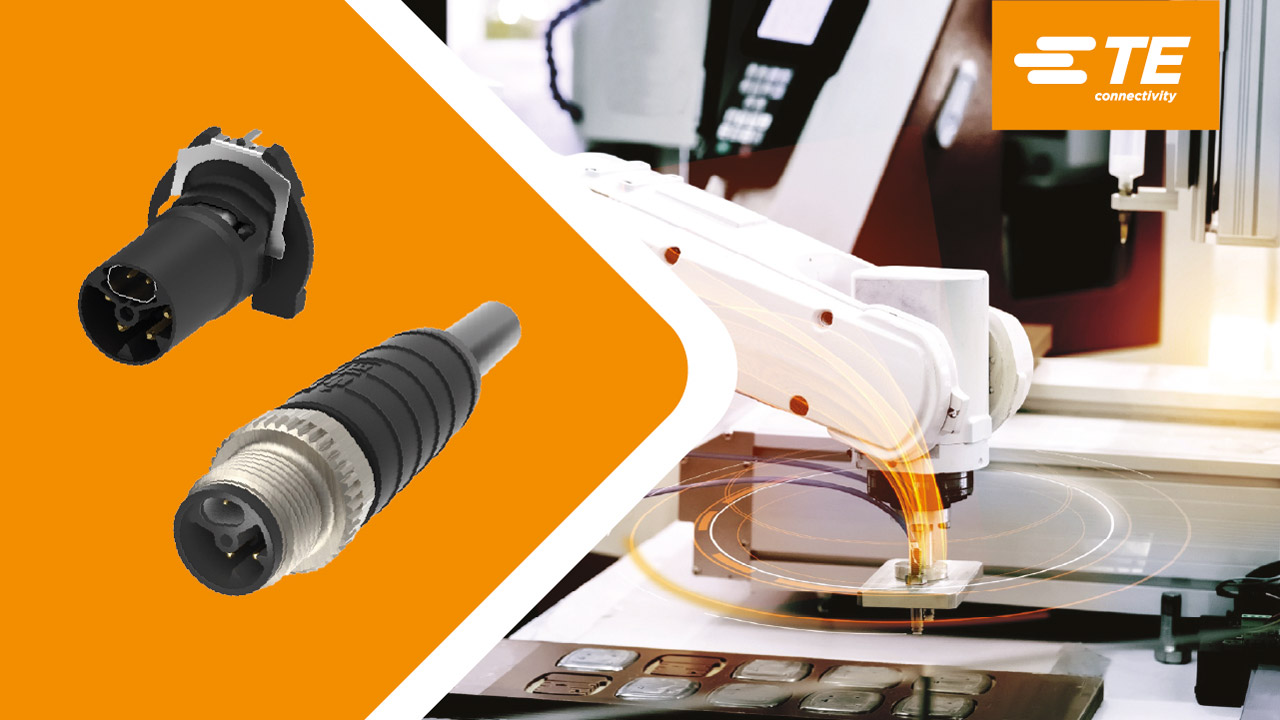
Single Pair Ethernet is gaining momentum thanks to further standardization and a growing cross-vendor ecosystem. There is an increasing prevalence of Single Pair Ethernet (SPE), especially in greenfield applications.
Power over Data Line (PoDL) and SPE hybrid solutions, where a single cable transmits data and power simultaneously, simplify architectures and offer greater freedom in device design. Integrating native Ethernet communication into IT infrastructures without protocol conversion reduces the Bill of Materials (BOM) for infrastructure parts, helps enable faster installation and lowers overall costs. In industrial environments, SPE components are establishing latest scalable, IP-based automation architectures that are based on a global Ethernet ecosystem and are already prepared for Time-Sensitive Networking (TSN), cybersecurity, and converged IT/OT networks.
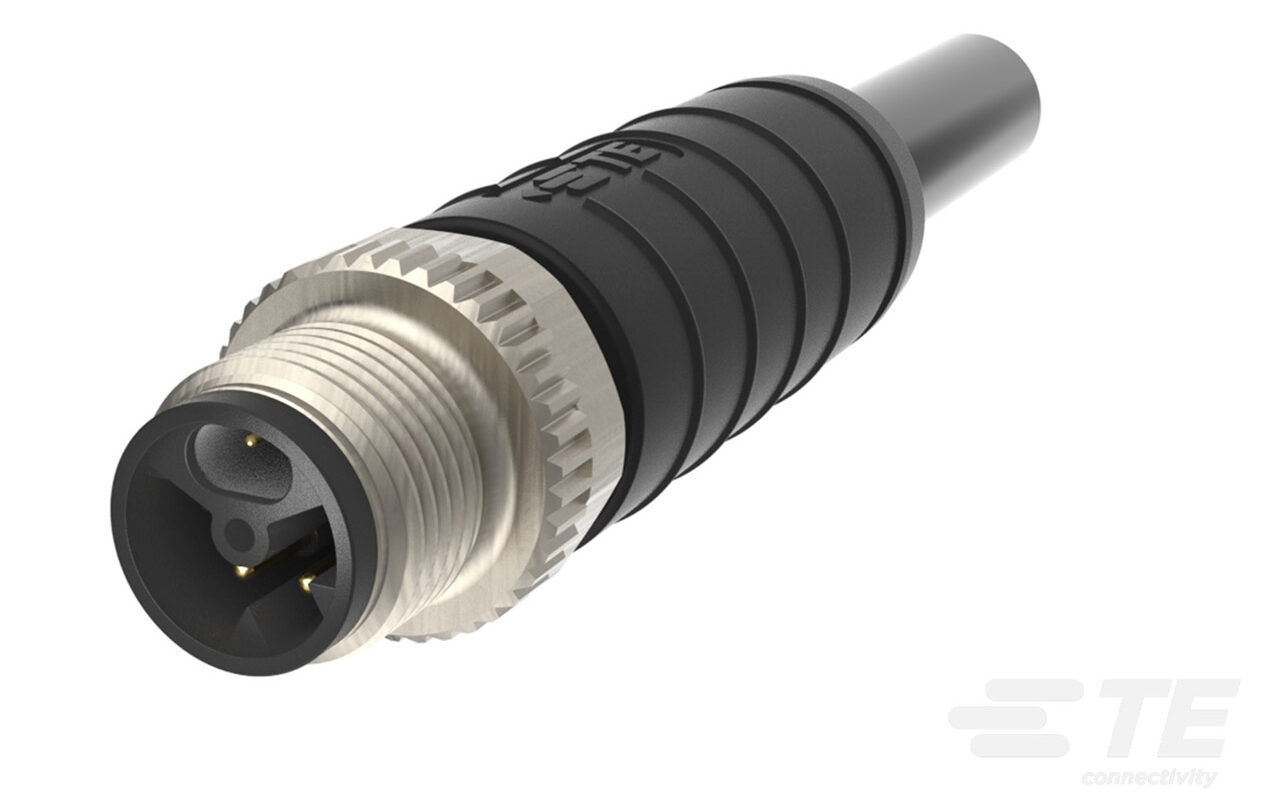
SPE connectors from TE Connectivity offer reliable data and power transmission for modern automation environments in a space-saving design.
Unification through standardization, this is how recent developments in SPE could be described. What was once a proliferation of many different mating faces has now given way to a universal standard that gives users many advantages and can help overcome inhibitions to the digitalization of factories and warehouses. The use of the same SPE interface in accordance with IEC 63171-7 and IEC 61076-2-117 (M12 to M40 hybrid) significantly expands the scope of application. IEC 63171-7 Edition 2 (ED2) defines connector faces for M8, M12, hybrid, and IP20 device interfaces.
When it comes to interconnectivity between devices and systems, SPE offers completely new possibilities. The new standards can accelerate the market introduction of SPE technologies, reduce complexity, support end-to-end Ethernet, and improve sustainability as less copper cable is used. Furthermore, the SPE ecosystem continues to grow, which already drives further practical applications.
Many use cases show that only SPE can help to fully exploit the potential of many applications. To assess the status of integration, you need to distinguish between open systems (PLCs, I/Os) and closed systems (e.g. mobile robotics). SPE solutions are available for both types as explained in more detail below.
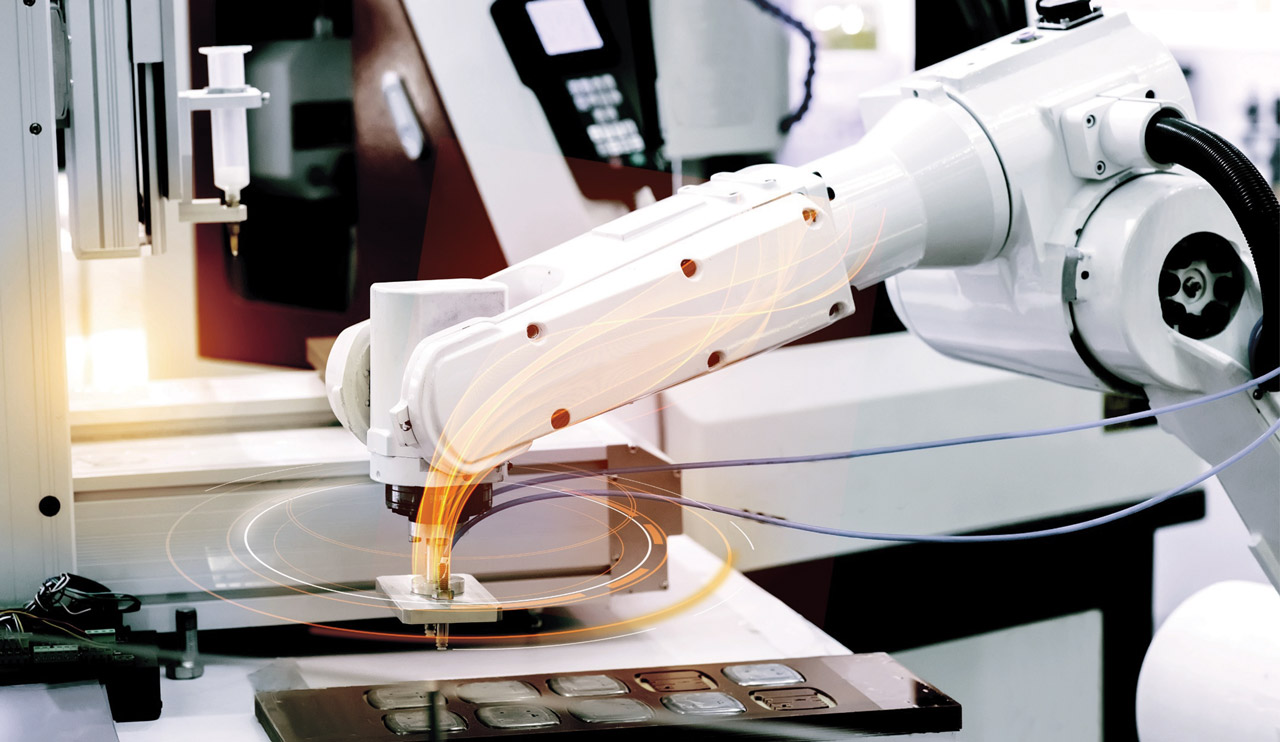
Many use cases show that SPE is required to fully exploit the potential of many applications – in particular, it supports the trend toward miniaturization, which can be important in cobots, industrial robot arms, and end-of-arm tooling (EOAT).
Growing ecosystem overcomes application barriers
Overall, most suppliers of SPE components and systems understand that it is important to establish a growing ecosystem, help in enabling users to choose from a wide range of interesting SPE products and benefit from them. This includes SPE field devices, switches, network components, and cabling solutions with corresponding connectors. TE Connectivity (TE) is also driving the adoption of new standards so their comprehensive SPE ecosystem can emerge.
The new version of IEC 63171-7 (Edition 2) is a significant step in the further development of industrial connectivity and the faster introduction of Industry 4.0. TE’s active SPE network components support both M8 and latest M12 connectors. SPE is considered the next step towards end-to-end IP-based communication architectures down to the field level, as it can connect entire production sections, and will also play a vital role in future warehouse logistics. As a single, open, scalable Ethernet-based network within an automation system, SPE helps reduce the complexity and cost of connectivity.

SPE is reliable for integration into closed (stand-alone) systems, such as automated guided vehicles (AGVs) and autonomous mobile robots (AMRs), providing both power and data connectivity for subsystems.
Greenfield applications are integration drivers
Currently, SPE integration is focused on greenfield applications, as these offer a low-risk entry. Greenfield integration refers to an SPE project that is developed from scratch and is not based on existing systems, devices, or infrastructure. Intralogistics stands out in particular here: Driven by the ongoing trend automation, SPE can be implemented with relatively low risk, as many projects are being newly developed.
Industries with a lower level of digitalization, such as process and factory automation, are also beginning to adopt SPE. The need to modernize infrastructures and introduce future-proof technologies is accelerating initial implementations in these environments. In factory automation, the demand for data-driven automation is growing rapidly, while at the same time, existing Ethernet structures in factory plants and shop floors are reaching their physical and economic limits when it comes to implementing digitization strategies.
Hybrid SPE technologies are predestined for automation applications, especially in closed systems, such as stationary and mobile (autonomous) robotics. Thanks to its dimensions, an M12 hybrid connector can transmit higher voltage and current than a smaller M8 connector, help in enabling it to power more powerful devices.
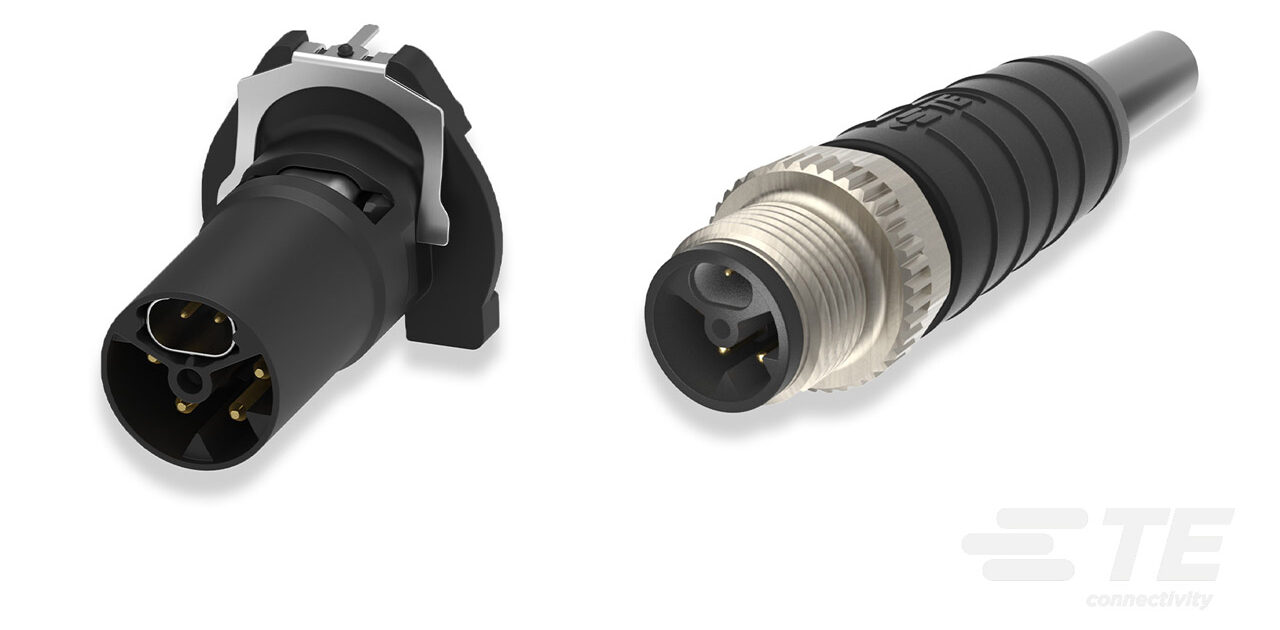
TE introduces latest SPE M12 hybrid connectors, setting a milestone in industrial communication by adding an important component to the SPE product portfolio.
Successful application in various use case scenarios
TE‘s latest compact SPE M12 hybrid connectors support the transmission of high-speed data and unprecedented current levels via a single cable. This makes this connection technology highly suitable for robotics systems and drives, as well as for future IIoT applications in automation technology. In particular, it supports the trend towards miniaturization as e. g. cobots, industrial robot arms, end-of-arm tooling (EOAT), sensors, and image processing systems can achieve greater performance in the conventional M12 form factor without requiring more space.
SPE has only a single twisted pair of wires, resulting in very compact connectors and cables. This helps to allow for smaller housing, more compact installations, and lighter mobile applications in robots, conveyor belts, and drag chains. SPE is also suitable for integration into closed (stand-alone) systems, such as automated guided vehicles (AGVs) and autonomous mobile robots (AMRs), providing both power and data connectivity for subsystems such as servo motors, LiDAR sensors, and encoders.
In contrast, SPE also offers many advantages in open and decentralized systems, such as controllers, I/O modules, and control cabinets. The integrated design helps simplify complex cabling, helps to avoid cable clutter, and reduce installation costs, even with high transmission power. With TE’s SPE solutions, engineers can implement M2M communication with virtually no data loss, decentralize computing power, and transfer data to the edge more efficiently and transparently.
From vision to reality with TE’s SPE solutions
- Simplification and miniaturization: Fewer cables and connectors
- → enhanced design and easier maintenance.
- Future-ready: Supports TSN, IIoT, and AI-driven automation
- → ready for smart factories and warehouse logistics.
- Reliability: IP67 protection supports durability in harsh environments
- → reduces the risk of failure.
- Cost efficiency: Less installation effort, fewer components
- → Reduced total cost of ownership.
- Scalability: Seamless integration from sensors to cloud systems
- → supports Industry 4.0 architecture.
Overcoming the limitations of common M12 connectors
Conventional M12 connectors are limited regarding power and data transmission. Existing hybrid connectors according to IEC 61076-2-113 standard deliver only 2 x 6 A and 100 Mbit/s, restricting high-power devices and fast data exchange. This makes it difficult to meet the requirements of Industry 4.0. These barriers are to be overcome by the IEC 63171-7 ED2 standard and corresponding products that extend existing SPE standards to the M12 hybrid format.
The latest SPE M12 hybrid connector from TE consistently implements this approach. It offers a high degree of interoperability between devices even from different manufacturers due to standardized mating faces.
The latest SPE M12 hybrid is an industrial connector that combines data and power transmission in a single interface. It supports high-speed data transmission up to 1 Gbit/s and helps enabling real-time communication at data rates 10 times higher than in previous industrial applications. The 2 x 8 A power supply supports the operation of power-demanding components up to approximately 1 kW.
TE’s M12 hybrid connectors are used to integrate powerful field devices into the network and transfer high data volumes in real time to the control (PLC) or the cloud. The SPE hybrid connectors in M12 format help enable about 30% more power and 10 times faster data rates for real-time communication and advanced protocols, significantly reduces the need for gateways and fieldbus couplers. TE has developed the connector for harsh environments and designed it to be highly robust with IP67 protection rating.
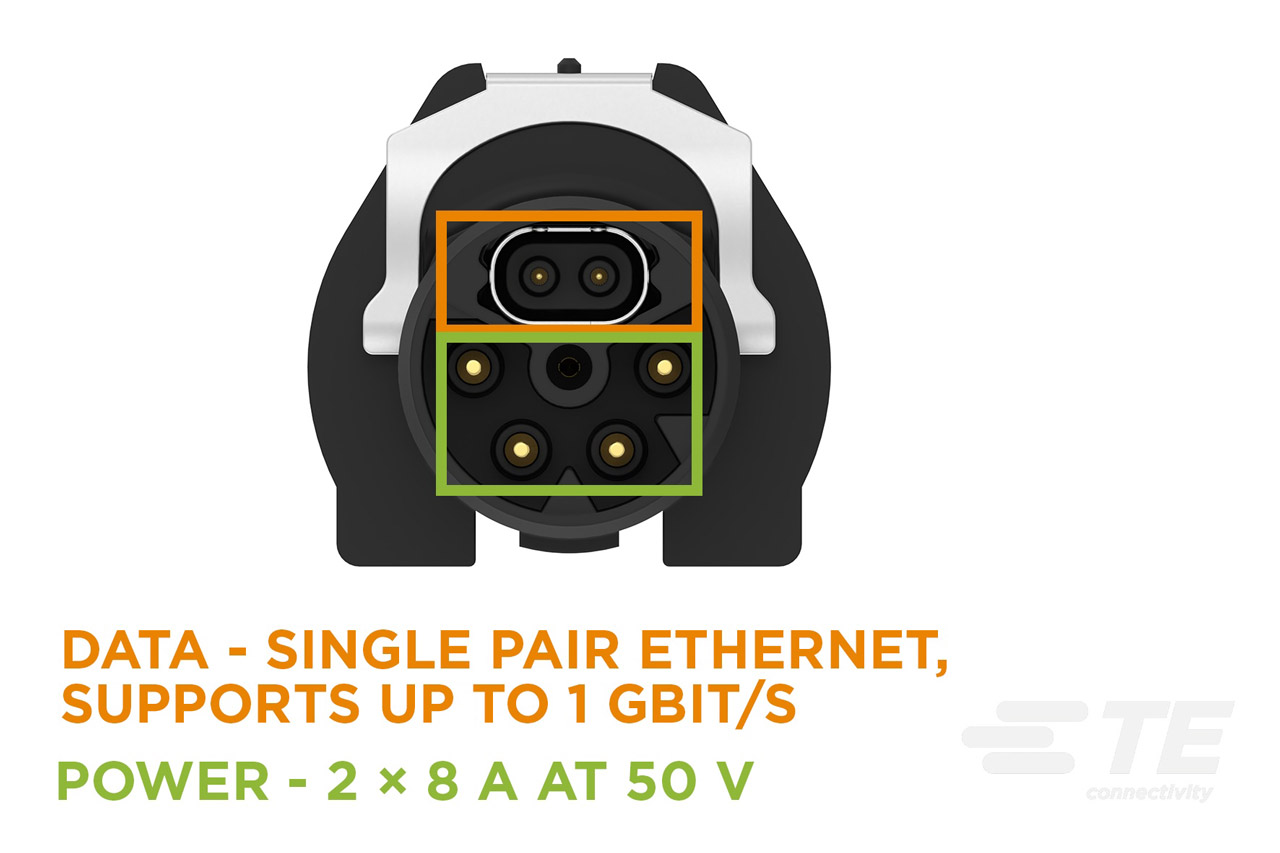
M12 hybrid connectors according to IEC 63171-7 standard support high-power devices with high-speed data rates of up to 1 Gbps (600 MHz) and power classes up to 9.6 kW, 16 A and 600 V.
Implementation of SPE
Manufacturers of devices, systems, and equipment can gain a competitive edge with SPE – and the perfect time is now. Developers and designers can incorporate the standardized and future-ready SPE M12 interfaces into their designs, increasing planning reliability and reducing development costs.
Since SPE is still uncharted territory for many manufacturers and users, consulting plays an important role in this connection technology. For example, a hybrid power scenario or multidrop facility requires vastly different approaches and solutions than other environments. While SPE can offer additional features and benefits, it is important for facilities to understand their needs, limitations, and goals when considering SPE technology and determining whether it can offer a return on investment (ROI) for their application.
Support for brownfield installations
When implementing SPE technology for networked devices in industrial applications, there are two types of integration: brownfield and greenfield. Brownfield integration refers to an SPE network that is built to work with existing devices, equipment, or other resources. Standard Ethernet is often already in place, and a plant may already have resources that can be used for SPE, including cables, connectors, and controls.
It’s important to take an inventory of the existing equipment because some can be reused when installing SPE technology. This can reduce the level of investment and setup time for installation. However, legacy systems, missing components, and highly customized subsystems can increase integration complexity and involve implementation risk.
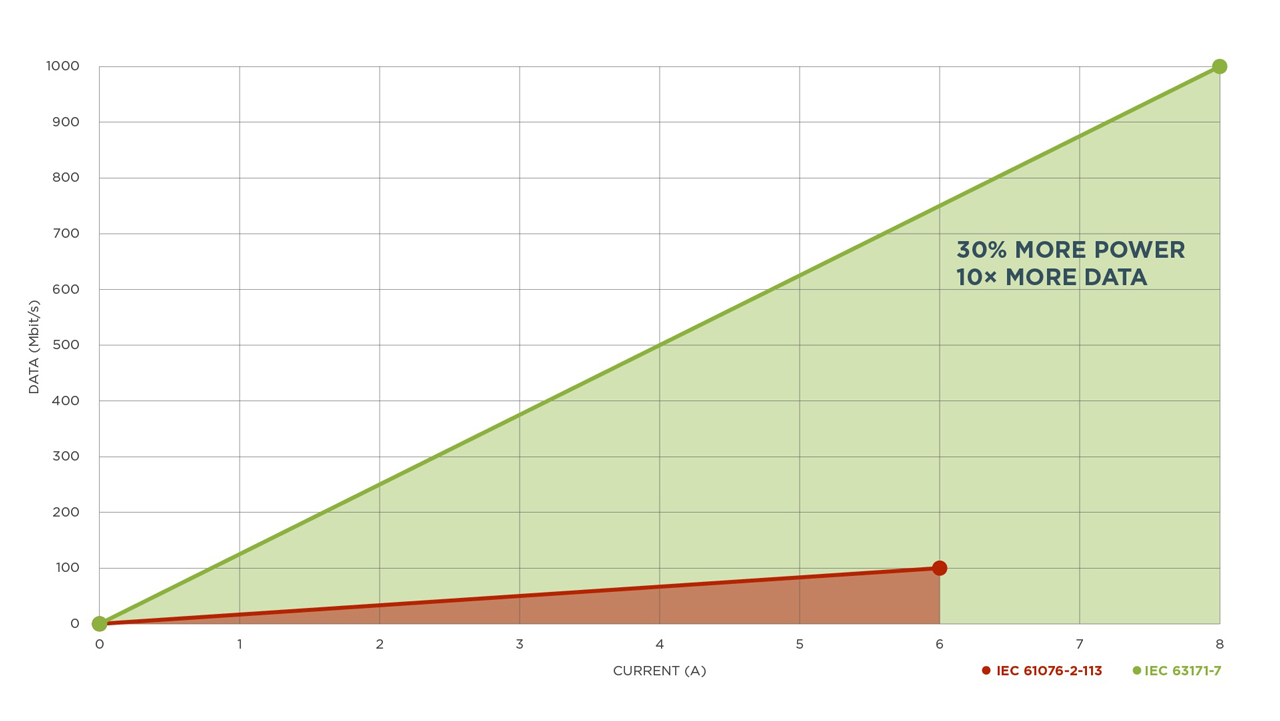
TE’s latest SPE M12 hybrid connectors help enable about 30% more power and 10 times faster data rates for real-time communication and advanced protocols.
Technical aspects of SPE greenfield implementation
A greenfield integration poses completely different questions than a brownfield integration since there are no existing connections or controls to consider. Greenfield integration requires a larger investment upfront to install the proper sensors and controls for connectivity. In addition, a greater understanding of SPE standards is needed to help ensure compliance and interoperability with devices and equipment.
It is also necessary to develop a comprehensive plan for deploying the SPE infrastructure, including cable routes, termination points, and network topology. Distance limitations, cable routing requirements, and potential sources of interference in industrial environments must be taken into account. Only then can the appropriate SPE cables be selected based on application requirements, along with SPE-enabled devices and components, such as sensors, actuators, switches, and controllers.
It is important to help ensure that the devices support the desired communication protocols and are interoperable within the SPE network. If necessary, it is advisable to find out whether Power over Data Line (PoDL) functionality is required for the application. PoDL supports devices to receive power over the same cable used for data transmission, simplifying wiring and reducing installation costs.
Robust network management tools and a network configuration plan – including IP addressing, VLANs, and network segmentation – can help fine-tune performance, security, manageability and troubleshoot issues. Fundamentally, an SPE infrastructure should be designed with future scalability and flexibility in mind, help in allowing for easy expansion and adaptation to evolving technology requirements and business needs.