

TechnologyMay 24, 2026
Industrial AI Moves to Operations, Readiness Gaps Determine Scale
New Cisco research details how Industrial AI is moving into physical operations. The report provides a data-driven view into how industrial organizations are adopting AI, challenges companies face and the emerging opportunities as AI becomes embedded in physical systems, infrastructure and workflows.
Cisco has announced the release of its latest annual industrial research report, The State of Industrial AI, examining how critical infrastructure like factories, utilities, and transportation systems are accelerating their direct deployments of AI.
The report provides a data-driven view into how industrial organizations are adopting AI, the challenges they face as AI moves into live operations, and the opportunities created as AI becomes embedded in physical systems, infrastructure, and workflows.
At a Glance
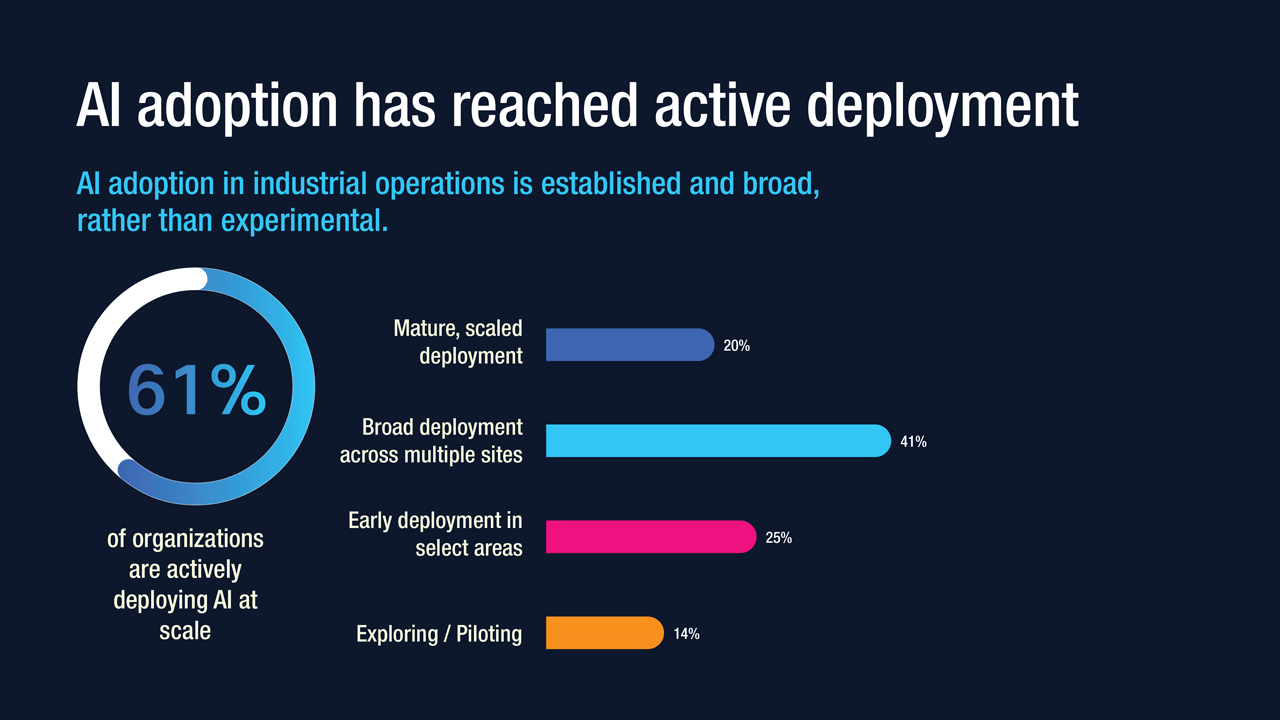
- Two thirds of industrial organizations have moved to active AI deployments in live operational environments.
- Network readiness and security posture are cited as the primary factors shaping how quickly and safely organizations scale AI across connected assets, machines, and sites.
- Strong IT/OT collaboration correlates with greater confidence in scaling AI, more stable network infrastructure, and stronger emphasis on cybersecurity.
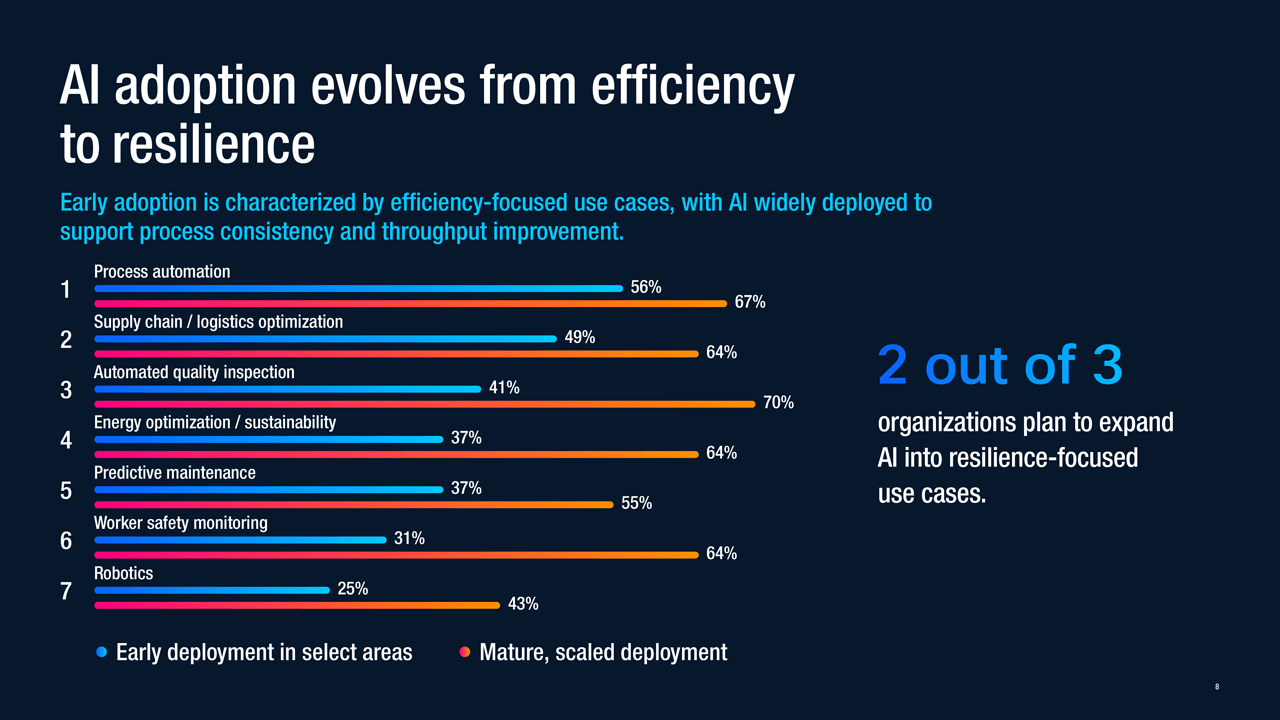
The double-blind global study surveyed more than 1,000 operational technology (OT) decision makers across 19 countries and 21 industrial sectors. The findings show that AI is now delivering measurable operational benefits in use cases such as process automation, automated quality inspection, predictive maintenance, logistics, and energy forecasting. However, many organizations are increasingly constrained by readiness gaps in networking infrastructure, cybersecurity, and IT/OT operating models as AI shifts into real time, production grade use in physical environments.
“Industrial AI is moving from experimentation into production, where AI systems sense, reason, and act in the real world,” said Vikas Butaney, SVP/GM of Secure Routing and Industrial IoT at Cisco. “At this stage, success is no longer determined by models alone, but by whether networks, security, and teams are ready to support AI at the edge, in motion, and at scale. The research shows that organizations confident in scaling AI are those treating infrastructure, cybersecurity, and IT/OT collaboration as foundational, not optional.”
Takeaways from State of Industrial AI Report
The survey shows industrial AI has moved from a future consideration to active deployment, with 61% of organizations now using AI in live industrial operations where performance, reliability, and security have direct physical consequences, and 20% reporting scaled, mature deployments. Across manufacturing, transportation, and utilities, AI is powering machine vision, robotics, mobility, and safety critical operations.
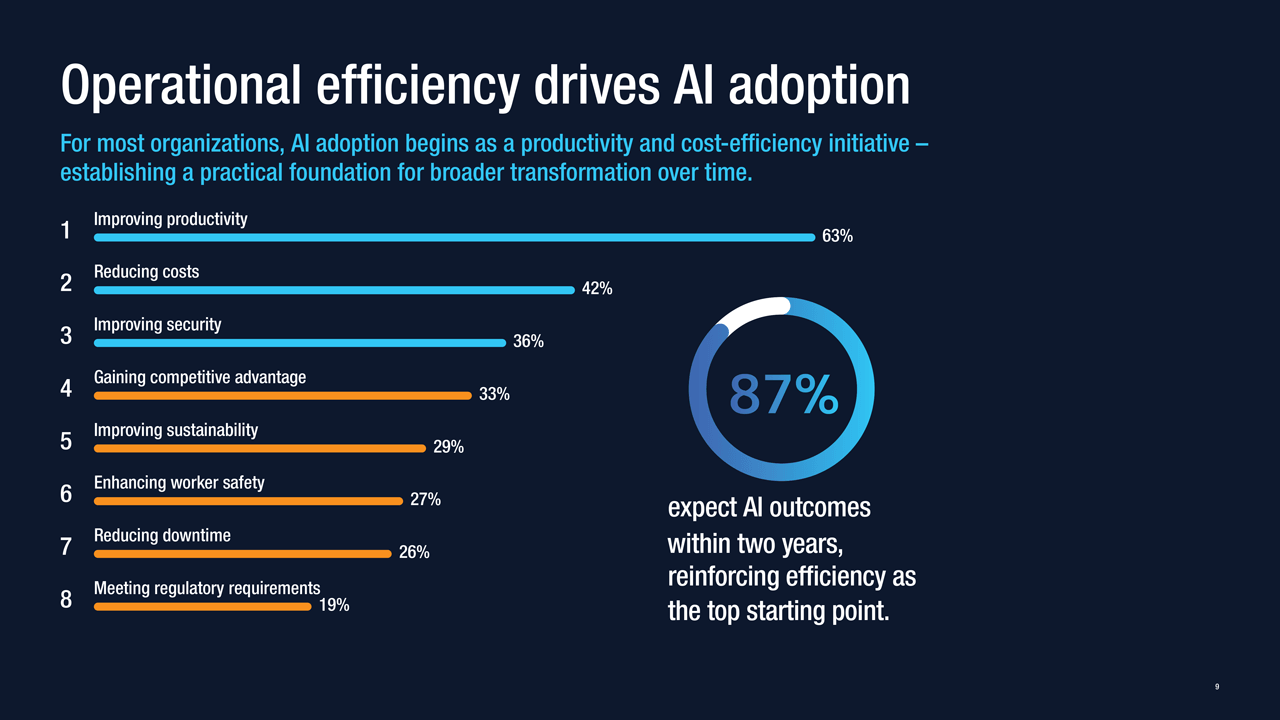
Most organizations plan to increase AI spending (83%), and nearly nine in ten expect meaningful outcomes within the next two years (87%). Yet as adoption accelerates, many are struggling to sustain and expand deployments, with readiness across network infrastructure, security, and skills increasingly determining whether AI can scale consistently across core physical environments.
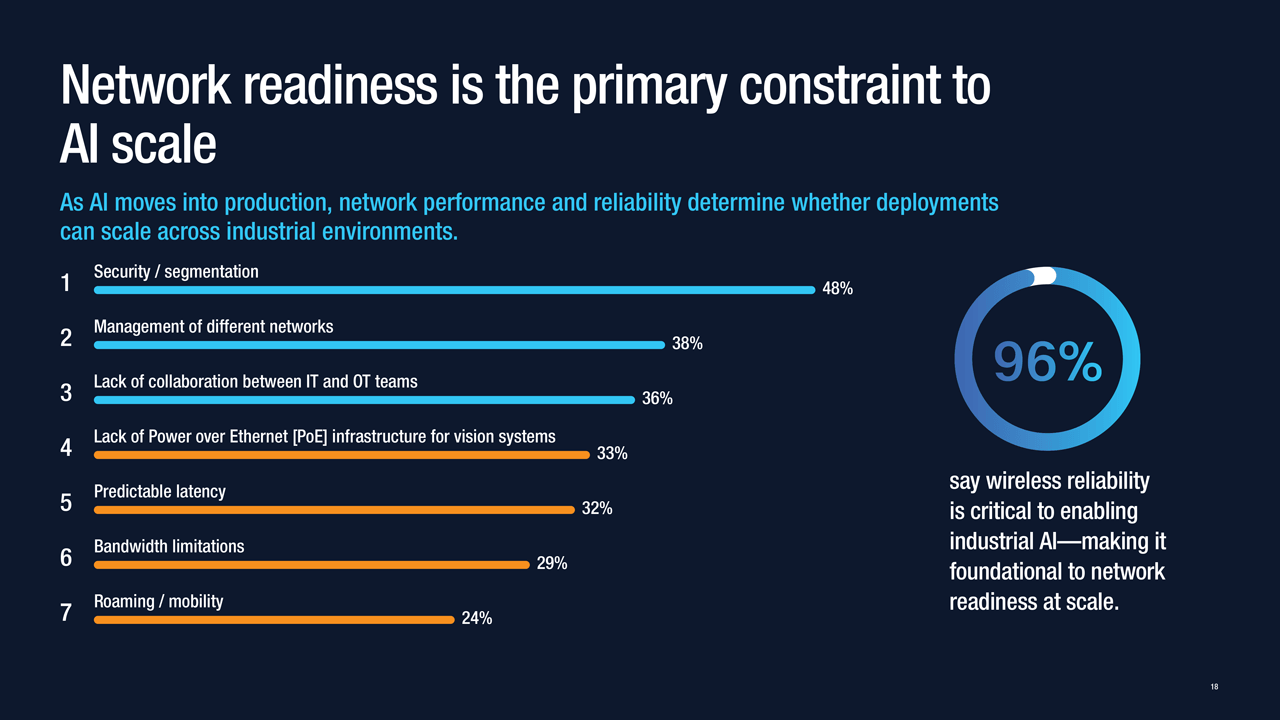
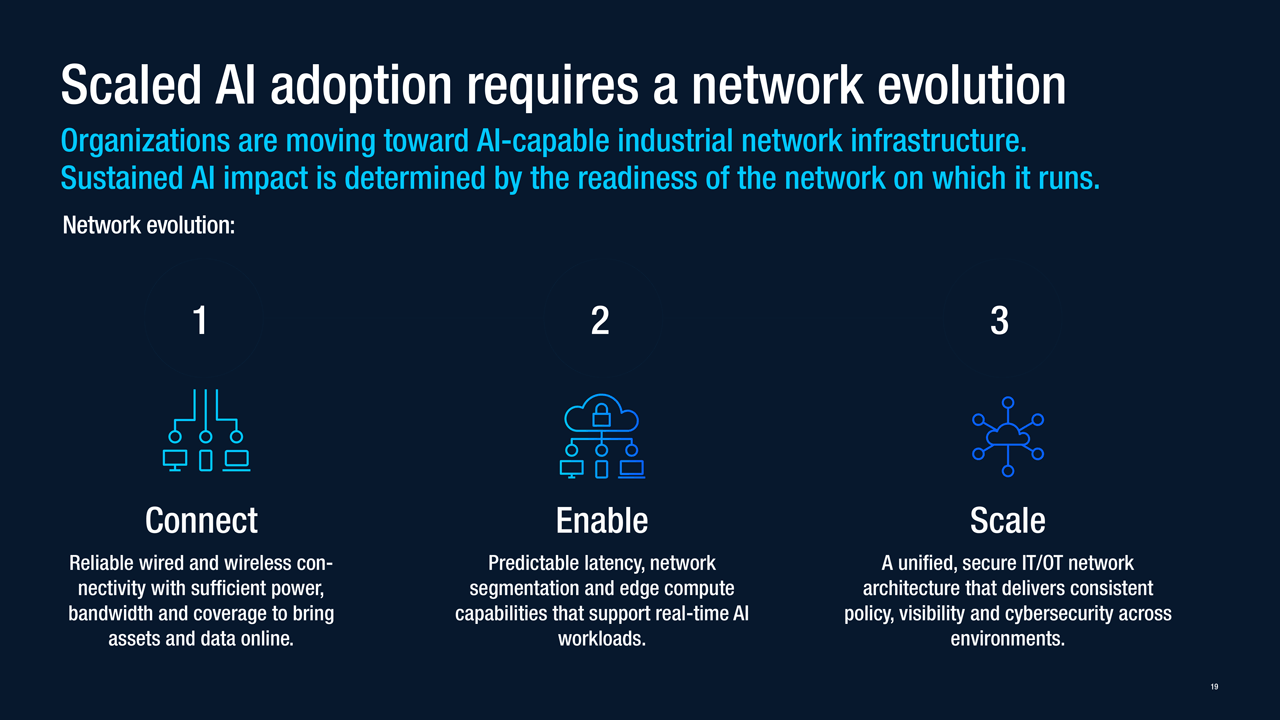
Infrastructure readiness is emerging as a primary determinant of scale. As AI becomes embedded in machines, sensors, vision systems, and autonomous operations, organizations face rising demands for reliable connectivity, wireless mobility, predictable latency, edge compute, and power, making network readiness a gating factor for physical AI deployments.

Other key findings include:
- 97% expect AI workloads to impact their industrial network requirements
- 51% of organizations expect AI workloads to increase connectivity and reliability requirements in their industrial networks
- 96% say wireless networking is essential to enabling AI
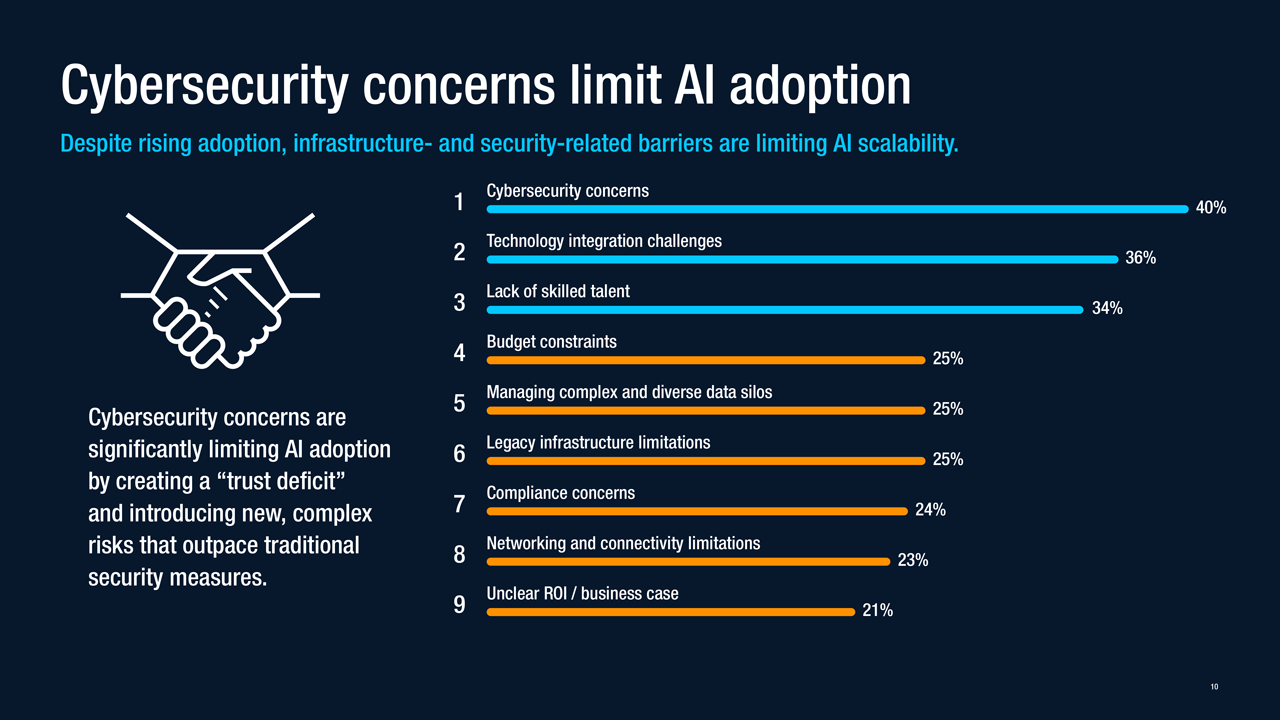
Cybersecurity is shaping both the pace and confidence of AI adoption. As AI expands connectivity and data flows across industrial environments, security remains the top barrier to scale. At the same time, organizations increasingly view AI as part of the solution, with a majority expecting AI to strengthen monitoring, detection, and operational resilience.
- 98% say cybersecurity is foundational for AI-ready infrastructure
- 40% cite cybersecurity as the biggest obstacle to scaling AI
- 85% expect AI to improve their cybersecurity posture
IT/OT collaboration is proving critical to operationalizing AI at scale. Organizations with closer collaboration between IT and operational teams report greater confidence in expanding AI, more stable networks supporting physical operations, and a stronger emphasis on cybersecurity as a baseline requirement, underscoring the need to build the skills required for scalable AI adoption.
- 57% report some level of IT/OT collaboration
- 43% report limited or no collaboration
- 47% of organizations with limited IT/OT collaboration cite network instability as a top operational challenge to scale AI

Report Background
The State of Industrial AI Report is based on data from a global survey of more than 1,000 operational technology decision makers, conducted by Cisco in association with Sapio Research. Survey respondents were from 19 countries and across 21 industry sectors, representing a range of industries including manufacturing, transportation/logistics, energy/utilities and more. The report aggregates findings from decision-makers at companies with annual revenues of more than $100 million.
57% of Organizations Report Some Form of IT/OT Collaboration
In a recent blog post, Samuel Pasquier, VP, Product Management for Cisco Industrial IoT Networking said that “the real challenge isn’t about trying to turn every engineer into a hybrid IT/OT expert. It’s about building the kinds of teams where everyone brings their own specialty to the table to work together.”
“Picture a busy automotive plant. OT teams are hands-on, keeping the production line running, fixing conveyor belts, adjusting machinery, and making sure everything operates smoothly,” Pacquier said. “Meanwhile, IT manages the secure flow of images from AI-powered inspection cameras and delivers real-time analysis.”
He added that the same dynamic plays out in utilities. OT teams manage the grid and respond to emergencies, but it’s IT’s analytics and cybersecurity that keep operations resilient. If that partnership is missing, critical data can go unnoticed, and systems become vulnerable.Yet many organizations still struggle to bridge the gap between IT and OT. Survey responses show that when this collaboration is missing, businesses miss out on the full potential of AI and automation.
From Readiness to Results
“We’ve seen just how far industrial AI has come, but now it’s time to raise the bar and ask, “what’s next?” The State of Industrial AI Report digs into this question,” Pasquier added. “The findings are clear: it’s not just about smarter machines; it’s about building the right network, protecting data, and making sure worker safety is never left behind.”
Finally he added, “Think of it like an espresso machine: if the system isn’t properly set up and the internal pipes aren’t clean, you won’t get that balanced brew. The pressure, temperature, and clear lines all have to work in sync. AI is no different. Even the most advanced AI needs a reliable, secure, and well-maintained network to work at its best.
If the network isn’t properly set up or maintained, the AI’s results won’t live up to its potential.”
View the complete blog post, Industrial AI: Progress, Pressure, and the Path to Scale, by clicking here,