

TechnologyMay 24, 2026
Ethernet-APL Extends HART-IP to Field Instrumentation
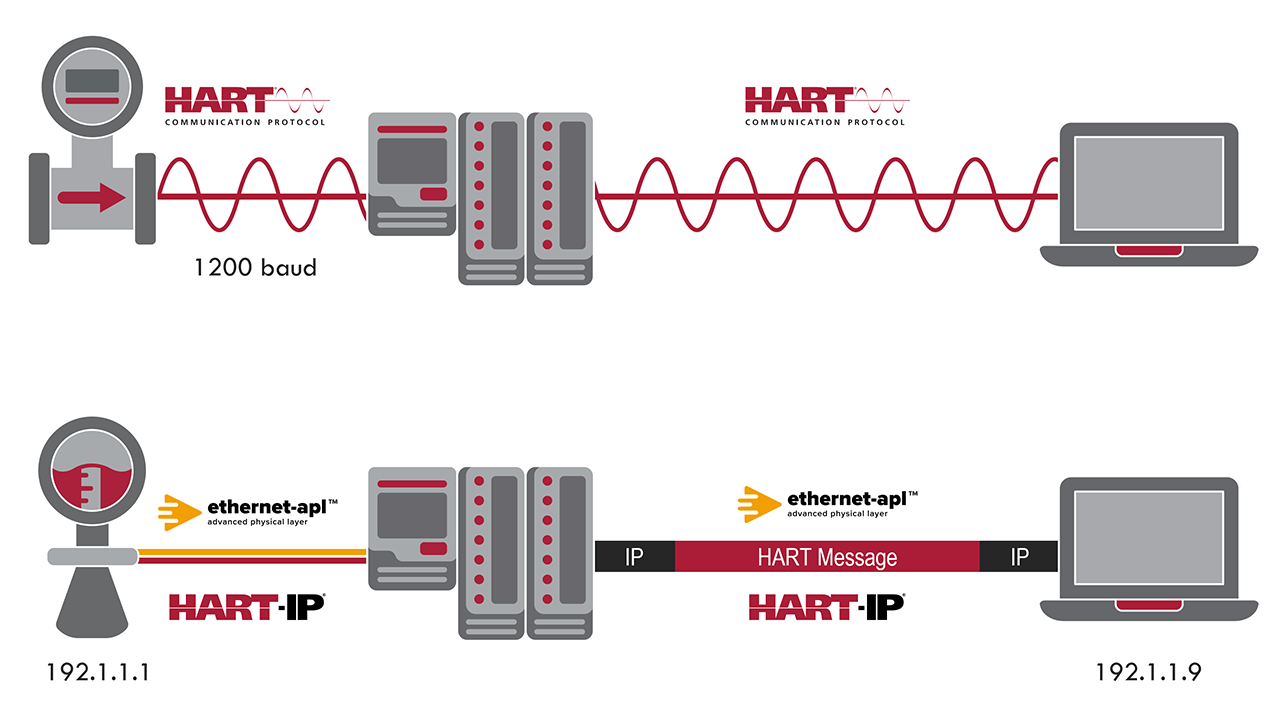
HART-IP is expected to play a major role in accelerating Ethernet-APL adoption because it provides the industry with a familiar and proven migration path to Ethernet-based architectures.
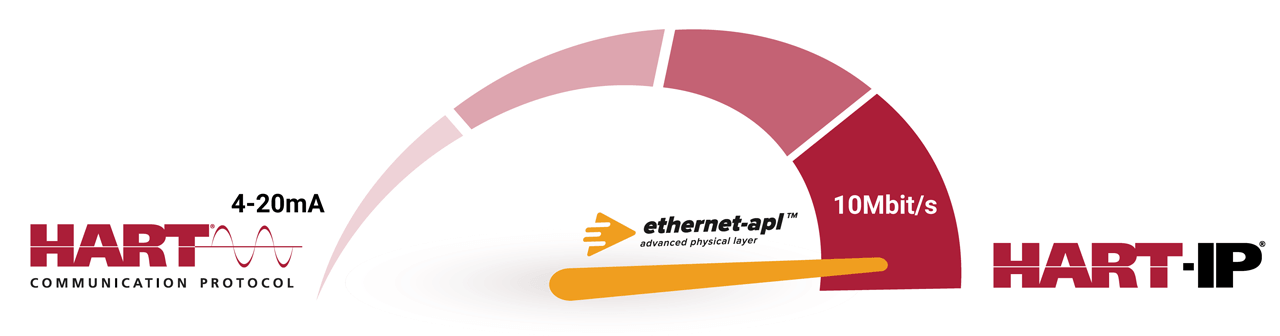
Figure 1 (above): At 10 Mbit/s, HART-IP over Ethernet-APL can transfer a 1 MB file in approximately one second. The same transfer over traditional HART 4–20 mA communication would take roughly 2 hours and 25 minutes, demonstrating the dramatic performance advantage of Ethernet-APL.
With the emergence of Ethernet-APL, industry has an opportunity to take a technology it already knows, uses, and trusts — HART — and extend it into modern Ethernet architectures without fundamentally changing operational workflows or engineering practices.
A special thank you to Paul Sereiko, Director of Marketing and Product Strategy at FieldComm Group for providing insights into this technology opportunity via this Q&A.
Single Pair Ethernt (SPE) and Ethernet-APL are rapidly becoming foundational for smart manufacturing use cases such as asset health monitoring, predictive maintenance, and scalable Industrial Internet of Things (IIoT) deployments.
Industrial Ethernet: What is one specific area with Ethernet-APL where the new standards will create unique technical value?
Sereiko: One of the most important opportunities for Ethernet-APL is extending HART-IP directly to field instrumentation. This gives process manufacturers a practical path to modern Ethernet-based architectures while preserving the familiarity, reliability, and installed-base advantages of HART technology.
HART remains the most widely deployed communications protocol in the process industries, with more than 50 million installed devices worldwide. By combining HART-IP with Ethernet-APL, plants can move native HART communications onto high-speed Ethernet networks that extend directly into hazardous and intrinsically safe environments.
The result is a major improvement in performance and operational visibility. Engineers gain dramatically faster commissioning, real-time diagnostics, remote configuration capabilities, and continuous access to richer device and asset health data. The performance difference is substantial.
Specialized features that require large file transfers could take hours using traditional HART communication but can be completed in roughly one second using HART-IP over Ethernet-APL. HART-IP enables product deployment of specialized higher bandwidth products in the same ecosystem as the traditional measurement products.
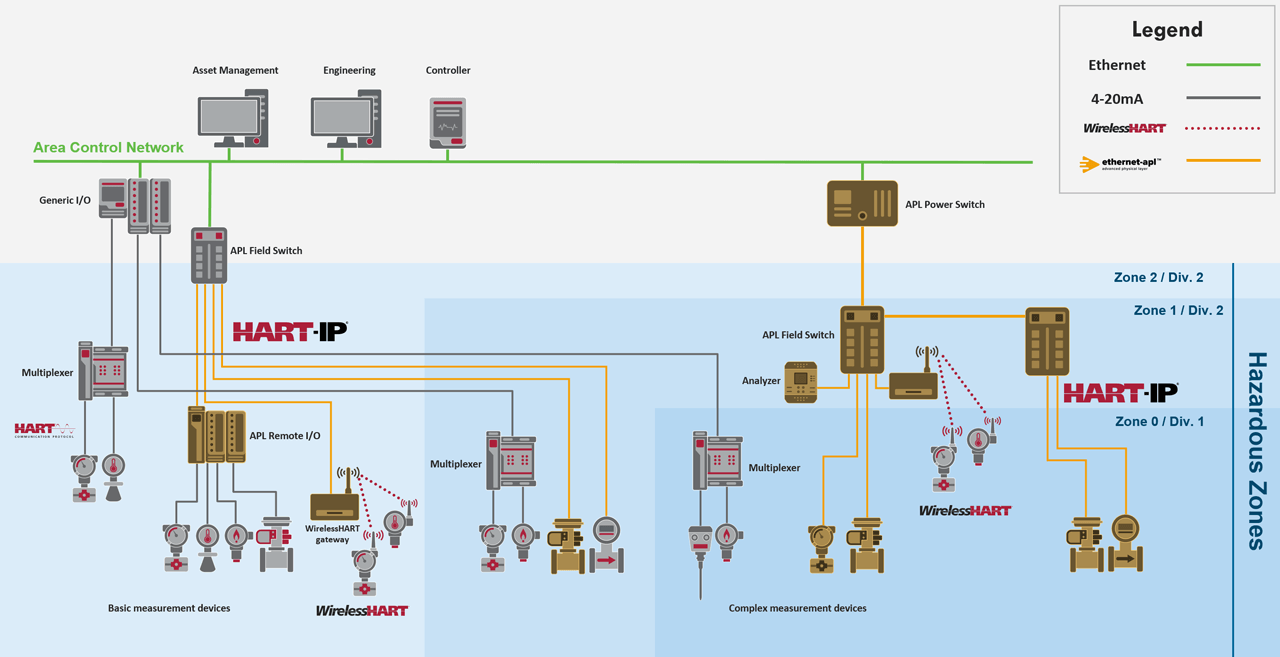
Another important advantage is flexibility. Existing HART devices, WirelessHART monitoring networks, and next-generation HART-IP field instruments can coexist within the same Ethernet infrastructure. This creates a scalable field-to-cloud architecture that supports predictive maintenance, monitoring and optimization initiatives, and broader industrial digitalization strategies.
Single Pair Ethernt (SPE) and Ethernet-APL are rapidly becoming foundational for smart manufacturing use cases such as asset health monitoring, predictive maintenance, and scalable Industrial Internet of Things (IIoT) deployments.
Industrial Ethernet: What technical features and benefits provide a more advanced solution?
Sereiko: HART-IP over Ethernet-APL provides a more advanced approach by moving native HART communications onto standard Ethernet infrastructure directly at the field level. HART-IP encapsulates standard HART commands into IP packets, allowing field instruments, WirelessHART gateways, remote I/O systems, and asset management applications to communicate using modern Ethernet networking practices.
Ethernet-APL provides the physical Ethernet infrastructure that allows this communication to operate reliably in process automation environments, including hazardous and intrinsically safe areas. Using Ethernet-APL power switches and field switches, plants can deploy scalable trunk-and-spur Ethernet architectures that support both power and high-speed communications over a simple two-wire cable.
The operational benefits are significant. Plants gain dramatically faster commissioning, improved diagnostics, remote configuration capabilities, real-time device visibility, and access to richer operational and asset health data. Higher bandwidth also enables support for more data-intensive applications and next-generation field devices.
Cybersecurity is also substantially improved. The latest HART-IP specification supports modern security best practices for Ethernet-based industrial protocols, including TLS/DTLS encryption, authentication, audit logging, and syslog capabilities aligned with IEC 62443 initiatives. HART-IP security also aligns with recommendations developed through the Industrial Security Harmonization Group (ISHG).
Another advantage is deployment flexibility. Existing HART infrastructure and WirelessHART systems can continue operating alongside new HART-IP over Ethernet-APL deployments, allowing plants to modernize using familiar HART workflows and engineering practices.
Industrial Ethernet: How is this technology different from what has been available in the past?
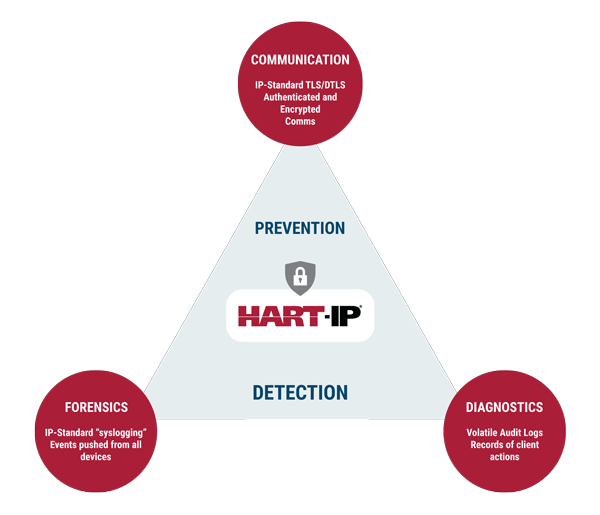
Figure 3: HART-IP uses a defense-in-depth security approach combining TLS/DTLS encrypted communications with audit logs and syslogging to deliver secure communications, auditability, and industrial network visibility.
Sereiko: Historically, HART communication operated primarily over point-to-point 4–20 mA analog loops with a low-bandwidth digital overlay used for configuration, calibration, and basic diagnostics. While extremely reliable and widely adopted, these architectures were not designed for continuous high-speed data access, large-scale analytics, or modern IT/OT integration strategies.
HART-IP over Ethernet-APL changes this model by moving native HART communications directly onto Ethernet networks at the field level. Instead of relying heavily on protocol converters, serial interfaces, or multiple overlay networks, HART-IP encapsulates standard HART commands into IP packets that travel across Ethernet-APL infrastructures using standard APL Ethernet switches and networking practices.
This creates a far more scalable and unified architecture. Devices can communicate directly with control systems, asset management platforms, analytics applications, cloud infrastructure, and cybersecurity systems using standard Ethernet technologies.
Another major difference is performance. Ethernet-APL provides 10 Mbit/s full-duplex communication directly to field instruments, enabling dramatically faster commissioning, remote configuration, firmware updates, and access to significantly richer diagnostic and asset health information compared to traditional HART communication speeds.
Importantly, plants gain these advantages while continuing to use familiar HART tools, workflows, and engineering knowledge.
Industrial Ethernet: How is Ethernet-APL an enabling technology to make this new solution possible?
Sereiko: Ethernet-APL is the enabling technology that allows HART-IP to extend securely and efficiently all the way to field-level instrumentation in process automation environments. Traditional Ethernet was never designed for hazardous areas, intrinsically safe installations, long cable distances, or powered two-wire field devices, which historically limited Ethernet deployment in the field.
Ethernet-APL is an enhanced physical layer for Single Pair Ethernet (SPE) based on 10BASE-T1L technology, as defined in IEEE 802.3. It enables both power and 10 Mbit/s full-duplex Ethernet communication over a single two-wire cable for distances up to 1,000 meters, including hazardous and intrinsically safe environments, extending Ethernet connectivity directly to field-level industrial devices.
This creates the network foundation for HART-IP to operate directly at the field level using standard Ethernet infrastructure and Ethernet-APL switches rather than relying heavily on gateways or protocol converters.
Another important advantage is that Ethernet-APL is protocol agnostic. HART-IP can coexist alongside PROFINET, EtherNet/IP, OPC UA, and other industrial Ethernet protocols on the same infrastructure. This allows plants to standardize on a unified Ethernet architecture while supporting a wide range of field devices and applications.
The higher bandwidth and Ethernet connectivity also enable support for more data-intensive devices such as analyzers, thermal imagers, and industrial video cameras operating over the same network infrastructure.
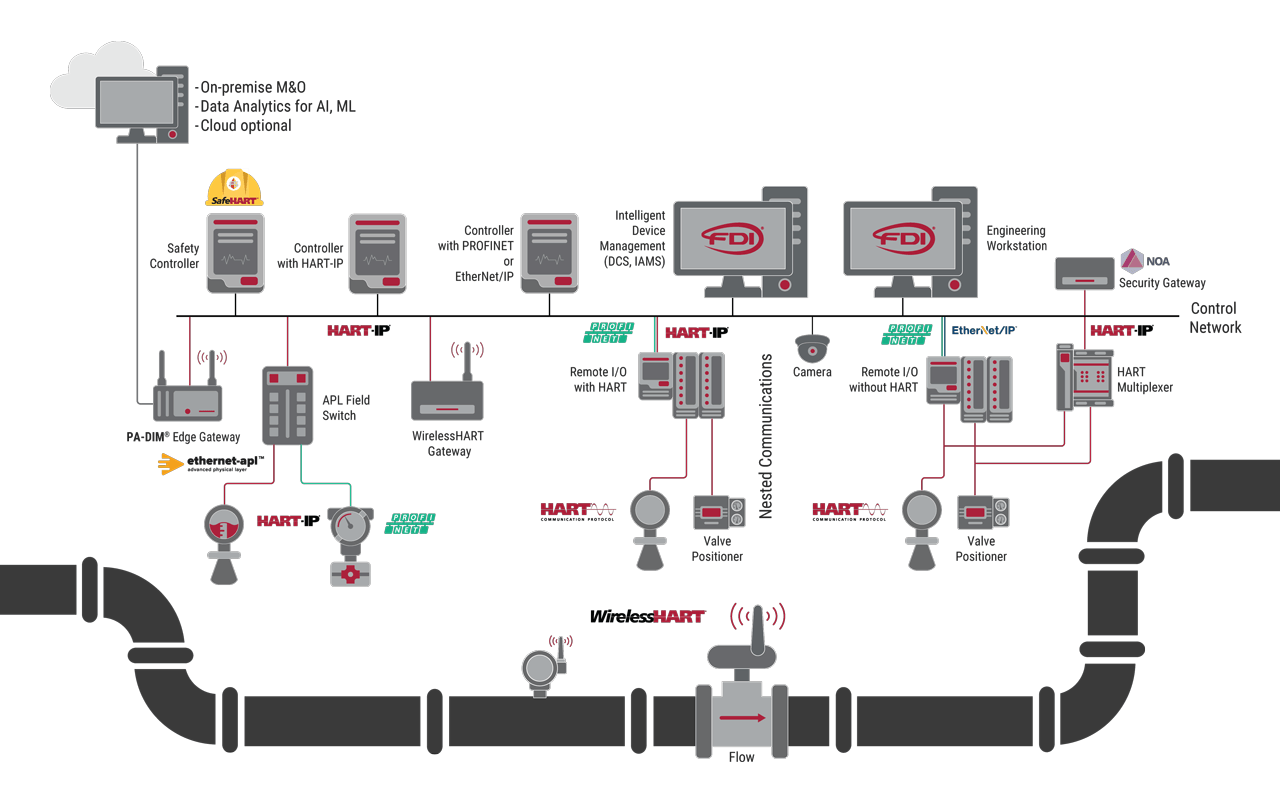
Figure 4: Ethernet-APL is protocol agnostic, allowing HART-IP, PROFINET, EtherNet/IP, OPC UA, and IP-enabled devices such as thermal imagers and video cameras to operate over the same Ethernet infrastructure
Industrial Ethernet: How does this solution contribute to the impact of Ethernet-APL?
Sereiko: HART-IP is expected to play a major role in accelerating Ethernet-APL adoption because it provides the industry with a familiar and proven migration path to Ethernet-based architectures.
HART-IP itself is not new technology. It has been commercially deployed in process automation products for more than a decade, most commonly within WirelessHART gateways. In those applications, WirelessHART field devices communicate wirelessly to a gateway, which assembles the data into HART-IP packets and transports it over Ethernet networks to control systems, asset management platforms, and analytics applications.
Over the next one to three years, the industry has an opportunity to take a technology it already knows, uses, and trusts — HART — and extend it into modern Ethernet architectures without fundamentally changing operational workflows or engineering practices.
Many applications are using HART-IP today through WirelessHART gateway deployments, reducing both technical and operational barriers to adoption. In addition, many suppliers already support HART-IP in commercial products, making the transition to Ethernet-APL significantly easier than deploying entirely new networking approaches.
This familiarity is expected to help accelerate deployment of scalable, secure, field-to-cloud architectures supporting predictive maintenance, monitoring and optimization initiatives, and broader industrial digitalization efforts across process and hybrid industries.