

TechnologyMay 20, 2026
Future‑Ready Access Networks for Smart Manufacturing
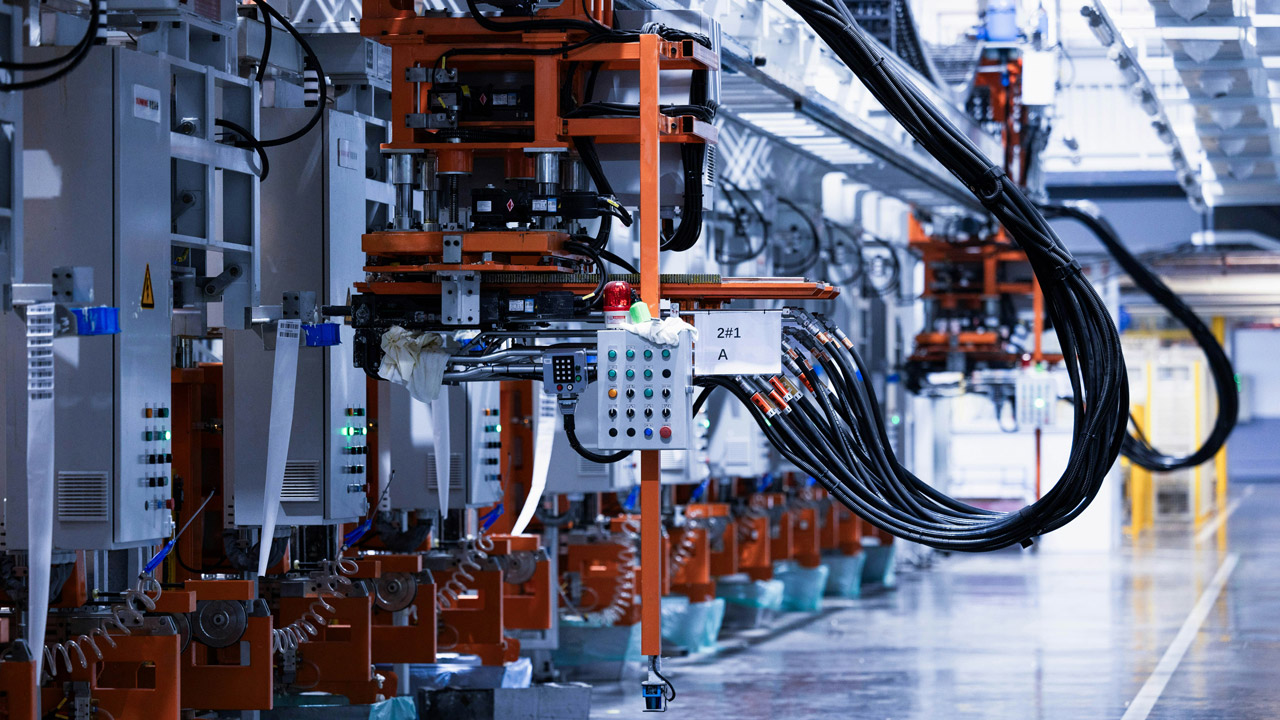
Smart manufacturing is defined by continuous change. Production processes evolve, automation deepens and connectivity demands increase. Networks that are fragile or rigid struggle to keep pace. Networks designed for resilience and adaptability, by contrast, become enablers of long‑term operational performance.
In smart manufacturing environments, connectivity is no longer a supporting utility. It is an operational dependency. From mobile workforces and scanners to automation, sensors, video and robotics, modern production workflows rely on network performance that is continuous and predictable.
Downtime leads to lost revenue, missed deadlines and disrupted supply chains. On top of that, the network also needs to perform in demanding, harsh conditions.
Factories, warehouses and logistics hubs are unique environments for connectivity. Industrial motors and equipment can generate interference, layouts change, assets move constantly, and facilities often include dense metal racking and high ceilings. These realities mean the goal is no longer just coverage, but reliable connectivity in environments that are inherently hostile to wireless signals, where tolerance for disruption can be extremely low.
The reality of connectivity on the factory floor
Smart manufacturing networks must support a wide range of devices and use cases: mobile handhelds, tablets and workstations, fixed sensors and cameras, and increasingly, autonomous vehicles and automation systems moving across large and complex spaces. Industry 4.0 initiatives are further accelerating automation and interconnectivity, increasing both the volume and criticality of network traffic.
A further complication is the diversity of device capabilities. Many industrial environments include a long tail of operational technology that remains bandwidth‑constrained and highly sensitive to interference. Designing access networks that can support modern workloads while continuing to accommodate legacy devices is essential for real‑world deployments.
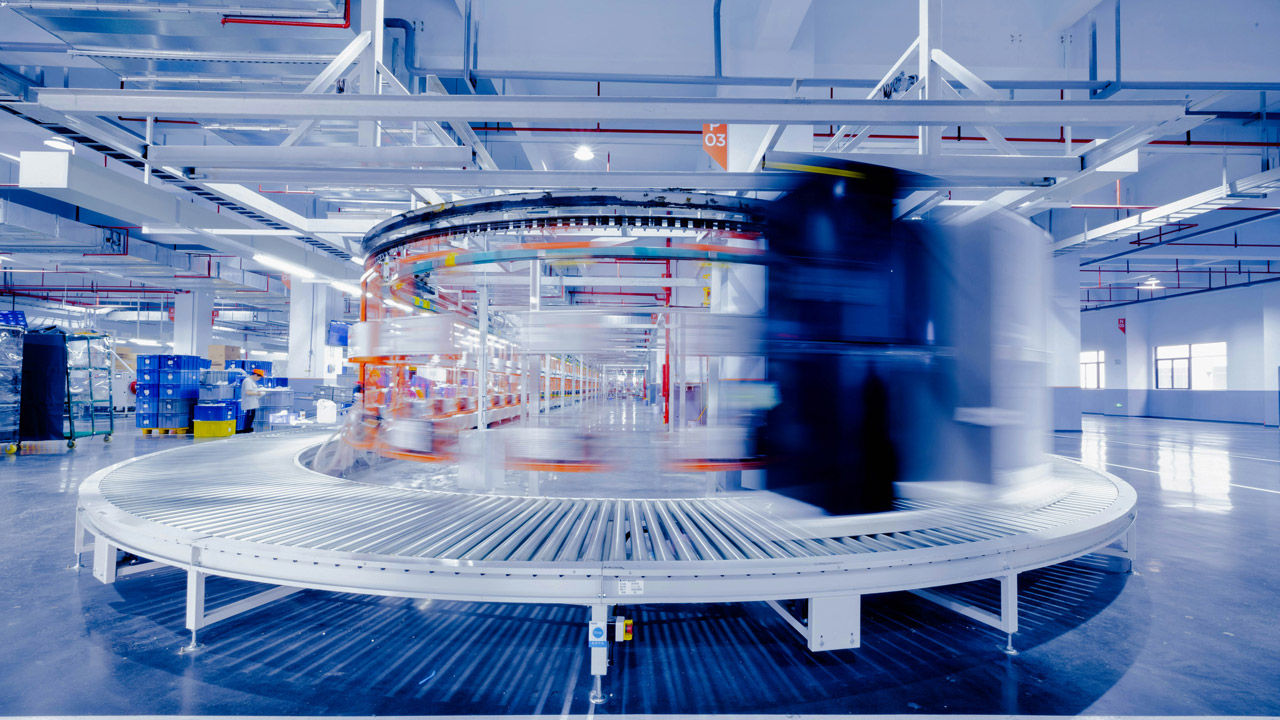
Many industrial environments include a long tail of operational technology that remains bandwidth‑constrained and highly sensitive to interference.
Designing scalable access infrastructure from ground up
A common mistake in industrial connectivity projects is treating wireless as a standalone upgrade. In practice, access networks must be designed as integrated systems where wired and wireless resilience work together. Operations depend on high‑availability performance end‑to‑end, not just at the radio layer.
On the wired side, eliminating single points of failure is critical. Legacy infrastructures often rely on a single uplink or power source for critical systems. As automation becomes more central to production, these weaknesses become costly risks. Designing redundancy into the foundation through multiple paths, resilient power and intelligent traffic rerouting helps ensure continuity when components fail.
Scalability is equally important. As more devices, data sources and automated systems come online, insufficient bandwidth at the access or aggregation layers can quietly constrain performance. Planning sufficient headroom and applying traffic prioritisation and segmentation helps networks support growth without repeated redesign.
Access switching plays a pivotal role in this balance. It sits at the intersection of power delivery, segmentation and expansion. Networks that cannot adapt to increasing power demands or growing device density often force premature upgrades. Scalable, modular designs allow organisations to expand connectivity capabilities in line with operational needs, rather than ahead of them.
The role of fibre‑based architectures in future‑proofing industrial networks
Smart manufacturing environments typically rely on a robust wired backbone to connect production zones, aggregation points and edge systems over long time horizons. Fibre‑based architectures are widely used in industrial settings to support high‑capacity, long‑lived distribution layers, while allowing access infrastructure to evolve as requirements change.
From a future‑proofing perspective, the value of a fibre‑rich design lies in architectural separation. Stable backbone connectivity can be maintained over time, while access layers are adapted incrementally as production layouts change, automation increases or device density grows. This approach also supports clearer zoning between production lines, warehouses, safety systems and administrative areas, each with distinct performance and risk profiles.
Importantly, fibre‑based approaches do not require overbuilding. When paired with scalable access layers, capacity can be added where and when it is needed, aligning investment with operational demand rather than speculative growth.
Wireless evolution: reliability before peak performance
Wireless connectivity is often the most visible element of smart manufacturing networks, but speed alone rarely determines success. Industrial environments are defined by interference, mobility and constant change. Wireless networks must perform reliably amid dense metal infrastructure, electromagnetic noise and continuous asset movement.
Design considerations therefore extend beyond floor‑level coverage. Warehouses and logistics facilities are vertical environments, and wireless designs must account for movement up and down, and across multiple levels. Thoughtful planning, appropriate placement and designs that adapt to changing conditions are essential for maintaining consistent connectivity.
Mobility adds further complexity. As autonomous systems and mobile assets move across large spaces, roaming behaviour becomes a critical factor.
Even brief interruptions can halt automated processes. Wireless evolution must therefore focus on reducing disruption during movement and improving resilience in challenging radio conditions.
As wireless standards advance, newer capabilities offer improvements in capacity, latency and reliability. However, these benefits are only realised when wireless upgrades are aligned with the underlying wired infrastructure. Increased wireless performance places greater demands on switching, power delivery and uplink capacity. Without coordination across layers, bottlenecks simply shift rather than disappear.
Compatibility also remains crucial. Few manufacturers can refresh all devices at once. Access networks must support mixed generations of equipment, allowing organisations to modernise at a controlled pace without disrupting operations.
Balancing performance, longevity and cost
In industrial environments, the true cost of a network is revealed over time. Initial deployment costs are only part of the equation. Uptime, adaptability and operational effort ultimately determine value. Networks designed for longevity prioritise flexibility. Modular architectures allow components to be upgraded independently, avoiding large‑scale replacements. Clear separation between backbone, access and wireless layers makes it easier to align investment with actual need rather than projected demand.
Operational simplicity is another critical cost factor. Manufacturing and logistics sites are often geographically distributed, and dedicated IT staff may not be present everywhere. Centralised management, proactive monitoring and intelligent analytics reduce the burden of troubleshooting, helping teams address issues before they affect production. Over time, this visibility lowers support costs and increases confidence in the network as a core operational system.
Security must be treated as part of resilience rather than an afterthought. As IT and operational systems converge, networks increasingly carry both business data and operational controls. Segmentation, role‑based access and continuous monitoring help ensure that connectivity supports innovation without increasing exposure to risk.
A practical blueprint for smart manufacturing access
Across industrial environments, the strongest outcomes tend to come from designs that prioritise resilient foundations before advanced features, favour modular expansion over bespoke complexity, and embed visibility and control from the outset.
That means eliminating single points of failure in the wired foundation, building in bandwidth headroom and segmentation and ensuring wireless access is engineered for the physical realities of industrial operations, including interference, vertical coverage and mobility. It also means using monitoring and management capabilities to reduce operational load and applying security controls that reflect the growing convergence of IT and operations.
Building networks that can evolve with manufacturing
Smart manufacturing is defined by continuous change. Production processes evolve, automation deepens and connectivity demands increase. Networks that are fragile or rigid struggle to keep pace. Networks designed for resilience and adaptability, by contrast, become enablers of long‑term operational performance.
Future‑ready access infrastructure is not about chasing every new technology. It is about aligning wired foundations, wireless design and operational management with the realities of industrial environments and the lifecycle demands of critical operations so connectivity can scale alongside the factory floor and continue delivering value as requirements evolve.