

TechnologyMarch 20, 2026
State of Industrial Ethernet Factory Connectivity Solutions
Both the current and future "State of Factory Connectivity" is in the midst of a tremendous boost from the AI technology revolution. AI is expected to significantly contribute to factory connectivity innovations over the next 1-3 years, with its greatest impact on factory networking within the next five years.
THE CURRENT STATE of FACTORY CONNECTIVITY is strong, and getting stronger. AI is providing an impetus to help reshape how connected systems and people operate. AI-powered tools can empower operators with more informed decision-making and help solve specific challenges in areas like quality, energy usage and cybersecurity. AI is also helping lead us toward a future of autonomous operations, where cost, efficiency, safety and resilience can be optimized by intelligent, self-learning systems.
For this special report, the Industrial Ethernet magazine gathered the perspectives of industry experts and what they see as both the current state and future of manufacturing networks. Here is what these industry experts had to say about the megatrends shaping Industrial Ethernet industrial networking.
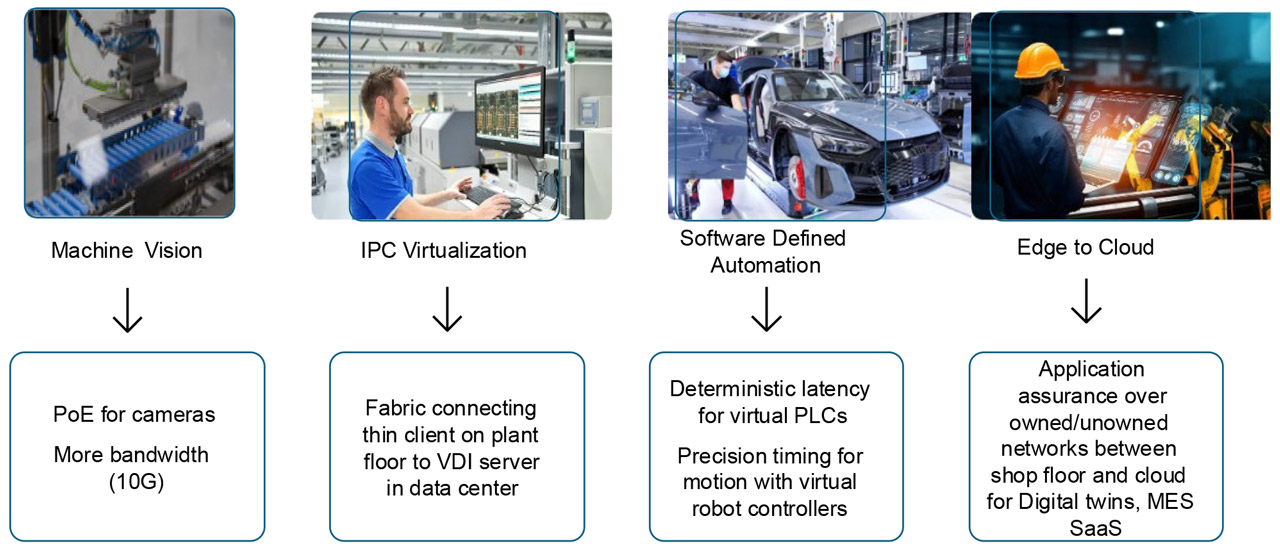
Characteristics of factory connectivity that enable common AI use-cases.
Secure, High-Performance Smart Manufacturing Networks
Enabling AI-driven analytics, digital twins and software-defined industrial automation.
“The current state of factory connectivity in smart manufacturing is built on a secure, high-performance, and resilient wired and wireless network foundation. This infrastructure connects diverse industrial devices, enabling innovations like AI-driven analytics, digital twins, and software-defined industrial automation,” Vivek Bhargava, Product Marketing Manager, Cisco Industrial IoT told the Industrial Ethernet magazine recently.
“Wireless technologies such as Wi-Fi 6/6E and Cisco Ultra-Reliable Wireless Backhaul (URWB) provide the bandwidth, low latency, and mobility needed for applications like Automated Guided Vehicles (AGVs) and Autonomous Mobile Robots (AMRs), enhancing factory flexibility,” Bhargava said.
He added that innovations such as software-centric manufacturing with virtualization of IPCs, HMIs, and PLCs, and cloud-based analytics are being utilized to improve production efficiency, flexibility, and time to market. Networks are also being called upon for increased visibility, zero-trust policy enforcements, and for remote access.
Manufacturers are investing heavily in network modernization, digital transformation, AI, and cybersecurity to scale smart manufacturing. The evolution of factory connectivity is toward a resilient, scalable, and secure IT/OT network architecture that enables operational excellence, sustainability, and competitive advantage in Industry 4.0 environments.
Factory Connectivity Trends
“Key trends pushing factory connectivity ahead include the integration of AI-powered processes, shop-floor virtualization, industrial mobility, and robust security – technologies that enable flexible, scalable, and secure manufacturing environments,” Bhargava said.
Industrial mobility needs for AGVs, AMRs, mobile tooling, as well as workers’ devices such as laptops, tablets, etc., are driving the need for wireless networks on the shop floor, requiring both Wi-Fi 6/6E and a more reliable higher-bandwidth industrial wireless solution such as Cisco URWB.
“Building accurate AI inferencing models and digital twins requires large-scale, high-speed, resilient connectivity that can collect and transport large amounts of data in near real-time between production assets, edge compute, data centers, and cloud environments. Similarly, shop-floor virtualization requires low-latency, low-jitter networks that can tunnel layer-2 machine control protocol traffic between machines and their controllers that are now might be located several miles away and not next to the machines they control,” he added.
For wired and wireless networks alike, factory networks must implement industrial cybersecurity measures, including deep visibility into assets, multilevel granular segmentation into zones and conduits following ISA/IEC 62443 and zero-trust principles, to safeguard data from unauthorized access while enabling secure communication across IT and OT domains.
Engineering challenges
Innovations in factory connectivity address key engineering challenges such as low-latency real-time requirements, resiliency, scalability and demand variability, security and data privacy, and operational complexity.
Low-latency low-jitter requirements are handled by using Time Sensitive Networking principles such as Frame Preemption (IEEE 802.3br and IEEE 802.1Qbu standards) that addresses the needs of control applications that require real-time communications. In this technology, transmission of lower-priority traffic is aborted in favor of higher-priority control traffic.
Factory networks must be resilient to ensure continuous operation and prevent costly downtime in industrial automation processes. Resiliency can be achieved by implementing redundancy protocols such as Media Redundancy Protocol (MRP), Device Level Ring (DLR), Resilient Ethernet Protocol (REP), High-availability Seamless Redundancy (HSR), and Parallel Redundancy Protocol (PRP), which provide fast recovery from link or node failures, often within milliseconds.
Bhargava said that a key issue is network availability which can also be improved if front-line workers who may not have deep networking skills are provided with tools that can help them diagnose issues and corrective steps, so these workers can fix problems quickly without time-consuming expensive escalation to networking experts.
Factory networks must be scalable and adaptable to change to support the increasing complexity and dynamic nature of modern manufacturing environments. This flexibility allows production lines to be reconfigured quickly, supports diverse use cases, and accommodates growth without disrupting operations. This need is addressed by management platforms that support plug-and-play addition of network devices and rapid reconfigurations.
Security is a key part of any network. Critical infrastructure such as manufacturing requires multilayer defense starting with deep visibility into all assets and traffic, dynamic segmentation to enforce access policies, and zero-trust network access.
AI connectivity advancements
“When you talk about the influence of AI, you need to consider two aspects. One, the AI technology used to manage factory connectivity itself to ensure its availability. And two, how the network enables the factory’s AI-driven automation,” Bhargava said.
“AI-powered management for factory networks enhances operational efficiency by leveraging AI to automate network operations, provide proactive monitoring, and deliver actionable insights. It maximizes uptime by quickly diagnosing issues and recommending remediation steps, reducing mean time to resolution (MTTR). It empowers first-line OT responders, even those with limited networking knowledge, to troubleshoot common problems, without escalating them to networking experts. This helps avoid expensive downtime,” he said.
“AI is expected to significantly contribute to factory connectivity innovations over the next 1-3 years, with nearly half of industry experts (48%) identifying AI as having the greatest impact on factory networking within the next five years,” Bhargava added. “Factory networks can enable AI by providing a robust, secure, and high-performance infrastructure that supports real-time data collection, processing, and communication. These networks deliver low latency and high bandwidth necessary for AI-driven applications such as machine vision, software-defined industrial automation, advanced robotics, digital twins, etc.”

“Three technological trends are currently shaping the further development of industrial networks: high-performance networking, next-generation wireless connectivity, and consistently security-integrated connectivity,” — Dr. Julia Reker, Director of Network Technology, Industry Management and Automation, Phoenix Contact.
Factory Connectivity in Major Transformation
Holistic, integrated communication architectures that seamlessly connect OT and IT.
According to Dr. Julia Reker, Director of Network Technology, Industry Management and Automation for Phoenix Contact, “industrial connectivity is currently undergoing a phase of profound transformation. Production facilities are becoming increasingly networked, software-defined, and intelligent.”
“Modern connectivity must not only be powerful, but above all secure. That is why Phoenix Contact consistently develops its devices in accordance with IEC 62443-4-1—i.e., certified secure development processes—and meets the requirements of IEC 62443-4-2 for secure components with its industrial network technology product families,” Reker told Industrial Ethernet recently.
Reker said the trend is clearly moving toward holistic, integrated communication architectures that seamlessly connect OT and IT while meeting increasing regulatory requirements. Regulations such as the Cyber Resilience Act (CRA) and NIS 2.0 increase the requirements for software lifecycle, patch and vulnerability management, and the verifiability of secure devices.
Phoenix Contact is following a security-by-design strategy with resilient, remotely manageable, and interoperable systems. Signed firmware, secure boot chains, role-based user management, and automated update processes ensure that connectivity becomes an active value driver in production—scalable, robust, and prepared for AI-supported applications.
Key Connectivity Trends
“Three technological trends are currently shaping the further development of industrial networks: high-performance networking, next-generation wireless connectivity, and consistently security-integrated connectivity,” Reker said. “Ethernet networks with TSN enable deterministic communication, while industrial WLAN solutions based on Wi-Fi 6/6E provide the necessary stability for mobile applications such as AGVs, cobots, and modular machines. At the same time, secure data communication is becoming increasingly important, as cyberattacks are now among the greatest risks to businesses and are becoming increasingly sophisticated.”
Reker said that Phoenix Contact is responding to this development with a comprehensive 360° industrial security concept that provides holistic protection for plants and systems against sabotage, data loss, and downtime. This is based on a consistent security-by- strategy, in which products are designed in accordance with the IEC 62443 philosophy right from the development process. This supports the implementation of legal requirements such as the NIS 2 Directive and the Cyber Resilience Act (CRA), as both regulations require demonstrably robust, securely developed, and updatable products, as well as clear protective measures throughout the entire life cycle.
Phoenix Contact addresses these requirements with powerful industrial switches, secure firewalls, industrial WLAN systems, edge-capable controllers, and a broad security portfolio. The key to this is a holistic architectural approach that considers the network, security mechanisms, device management, and data management as an integrated overall system. The result is transparent data flows, low latencies, and highly reliable, resilient communication—even under harsh industrial conditions and increasing regulatory requirements.
Engineering Challenges
“With the increasing digitalization of industrial plants, the complexity of modern network architectures is growing significantly. Today, operators must ensure that heterogeneous systems are reliably integrated, data streams are transmitted in real time, and production processes are kept highly available – all while facing growing cyber threats,” Reker said. “This is precisely where a key engineering pain point arises: networks must not only be powerful, but also designed to be secure from the ground up.”
The IEC 62443-3-3 standard defines clear security requirements at the system level, including segmentation, access control, network zones and conduits, monitoring, and measures to ensure integrity, availability, and confidentiality. In combination with IEC 62443-4-1 (Secure Development Lifecycle) and IEC 62443-4-2 (Device Security), this creates a holistic framework that obliges both device manufacturers and operators to implement protective measures in a technically sound manner. For engineers, this means that security mechanisms such as hardening, certificate and key management, logging, and secure update processes must now be an integral part of all network and system planning.
To relieve operators of this increasing complexity, Phoenix Contact supports its customers with network and security services: from network analyses and wireless site surveys to security assessments in accordance with IEC 62443, segmentation concepts, and vulnerability analyses. This provides operators with a robust, resilient, and IEC 62443-compliant infrastructure that can be operated transparently and securely over the long term.
AI Innovations
“AI will become one of the key drivers for secure industrial connectivity in the coming years. While today’s OT networks are still largely monitored and optimized manually, AI-supported processes will enable automated analysis, evaluation, and protection of communication structures in the future,” Reker said. “This will be particularly important as increasing cyber threats, more complex network architectures, and regulatory requirements such as CRA and NIS 2 demand significantly higher transparency and response speeds.”
She added that AI can provide targeted support for security mechanisms in line with the IEC 62443 series: models detect anomalies in OT traffic more quickly, classify risks according to 62443-3-3 criteria, and help to proactively secure security levels. At the same time, AI-supported diagnostic functions provide more precise insights into interference, RF profiles, and roaming behavior—a crucial factor for robust, resilient industrial Wi-Fi networks.
“In the long term, industrial connectivity and security platforms could be further developed so that AI becomes an integral part of secure automation networks. Self-optimizing systems that adapt to RF environments, evaluate security events in a context-sensitive manner, or apply adaptive patch and certificate strategies are conceivable,” Reker said. “In the future, this will result in resilient, partially autonomous communication systems that adapt flexibly to production and threat situations.”

“Technologies like AI are reshaping how connected systems and people operate. AI-powered tools can empower operators with more informed decision-making and help solve specific challenges in areas like quality, energy usage and cybersecurity,”– Joseph Biondo, Sr. Program Manager at Rockwell Automation.
Enabling New Operational Possibilities
More focus on where to process data to address performance, storage and security needs.
“The state of factory connectivity is strong, and getting stronger. It’s defined by the ongoing need to use data to not only generate actionable insights, but also to enable entirely new operational possibilities,” said Joseph Biondo, Sr. Program Manager at Rockwell Automation.
“Technologies like AI are reshaping how connected systems and people operate. AI-powered tools can empower operators with more informed decision-making and help solve specific challenges in areas like quality, energy usage and cybersecurity,” Biondo said. “AI is also helping lead us toward a future of autonomous operations, where cost, efficiency, safety and resilience can be optimized by intelligent, self-learning systems.”
Biondo’s view is that manufacturers are also becoming more intentional about where they process data to address performance, storage and security needs. Cloud platforms enable enterprise-wide coordination and visibility, while edge computing keeps data close to its source when real-time processing is required. At the same time, emerging approaches such as software-defined automation are creating more flexible systems that give manufacturers the scalable and adaptable automation architectures they need to remain agile.
State of Factory Connectivity
Biondo said that organizations need smarter operations to be agile and resilient as they face supply chain disruptions, cybersecurity risks, sustainability pressures, skills shortages and more.
Sustainability is a priority for manufacturers, but many struggle with a lack of real-time visibility, inconsistent data and difficulty scaling sustainability initiatives. Connected technologies are helping address these challenges. For example, solutions that integrate energy and production data can reveal where opportunities exist to optimize energy consumption. Technologies that automate and trace industry-specific processes can also help minimize waste and reduce downtime.
Cybersecurity is also more critical as ever. Many OT systems in use today were not originally designed with cybersecurity in mind, while cyber threats continue to become more sophisticated. As a result, more manufacturers are recognizing the need for proactive, OT-specific security strategies that address the unique complexities of industrial environments. Vendor-neutral, standards-aligned technologies are key enablers because they provide visibility into OT assets, helping organizations reduce risk exposure, accelerate remediation and strengthen governance.
Technology is also helping manufacturers mitigate the impact of skills shortages. For example, agentic AI capabilities are being embedded into HMI software, allowing operators to interact with chatbots for a variety of needs. This can help them make faster decisions, quickly access information like SOPs, and troubleshoot machines more efficiently and accurately.
Leveraging Emerging Technologies
“OEMs and automation engineers can use emerging technologies to address many of their most pressing engineering challenges,” Biondo said.
From a recent survey by Rockwell Automation, he said that nearly 8 in 10 OEMs said they view AI or machine learning as critical to designing quality into equipment. With so much uncertainty – from supply chain to workforce constraints and geopolitical pressures – manufacturers are looking for ways to ensure consistent product quality. Because product quality is also closely tied to sustainability goals, AI is increasingly being used to help maintain and improve quality. For example, AI can automate inspection processes and detect subtle deviations that may impact product quality. These systems can also recommend corrective actions, allowing manufacturers to address issues earlier and reduce scrap, rework and downtime.
“AI is driving a large shift in manufacturing – from automation to autonomy. The autonomous factory of the future will be built on intelligent systems that anticipate needs and continuously improve their performance, delivering unprecedented efficiency and safer production environments,” Biondo said.
He added that AI-enabled automation systems will optimize scheduling, dynamically adjust processes and detect potential issues before they disrupt production. Autonomous mobile robots (AMRs) and independent cart technologies will operate in unison to enable end-to-end material movement. Maintenance systems will self-diagnose equipment health issues and recommend work orders to address them. And people will increasingly guide systems using natural language.
“As AI becomes more deeply integrated into core production functions, manufacturing operations will become increasingly self-optimized,” Biondo said. “This will help manufacturers reach new levels of productivity and sustainability, while allowing employees to focus on higher-value work and constant innovation.”
“Solutions such as the Digital Twin and AI—including traditional, generative and now agentic—have helped businesses become more flexible, resilient and efficient while setting the foundation for increased automation that keeps the human in the loop,” — Rahul Garg, VP for Industrial Machinery Vertical Software Strategy, Siemens Digital Industries Software.
Focus on Open Systems and Universal Connectivity
AI a key accelerator as AI initiatives require structured data and a robust infrastructure.
“Factory connectivity was not evolving at the speed many expected, but AI is now a key accelerator because AI initiatives require structured data and a robust infrastructure to transport this data reliably and in real time. In brownfield environments, this evolution is happening through protocol convergence using edge gateways and hybrid architectures (on-site and cloud), allowing previously isolated systems to share data,” said Felipe Costa, senior networking and cybersecurity product manager at Moxa.
“At the same time, higher-bandwidth switching with 1G and 10G are moving closer to the edge, and data-intensive applications are becoming the new norm,” Costa said. “In greenfield projects, time-sensitive networking (TSN) is enabling deterministic and converged networks, while SPE and APL extend Ethernet to the sensor level, creating scalable and consistent data models.”
Costa said this transformation is not only about connectivity; it is directly impacting operational performance. Deterministic communication, higher bandwidth, and data normalization enable real-time analytics, closed-loop optimization, faster changeovers, predictive maintenance, and more flexible production. In other words, the network is evolving from passive infrastructure into a real-time data platform for smart manufacturing, improving OEE, reducing downtime, and increasing quality.
AI is also bringing back a core OT principle: resilience. Operations have always been driven by the triad of safety, reliability, and performance (SRP), and now the business layer is (re)discovering the importance of these elements. However, this new level of connectivity also highlights a persistent gap: many deployments still do not incorporate cybersecurity by design. As factories become more data-driven and interconnected, cyber resilience is a fundamental requirement for scaling AI and smart manufacturing initiatives safely.
Key trends and technologies
“AI is the most disruptive technology impacting all industrial sectors in different ways. Since the introduction of modern electronics and computing, we have not seen such a broad ecosystem effect,” Costa said. “Initiatives like IIoT, Industry 4.0, and 5.0 were mainly driven by specific business needs, but AI is fundamentally different because it creates both internal and external pressure for adoption, while also delivering visible business value. As a data-hungry application, AI is accelerating the entire connectivity stack, demanding protocol convergence, higher bandwidth, and more edge and cloud computing capabilities.”
Costa said that, with this exponential increase in data traffic, industrial networks now require a much better understanding of how to control undesired effects, such as broadcast and multicast storms, latency variation, and packet loss, which are conditions that AI-driven applications usually cannot tolerate. As a result, there is a clear need for more powerful managed switches, intelligent traffic management, network segmentation, and resilient architecture that keep applications running even under non-ideal conditions. This is not only improving connectivity but directly increasing the performance and stability of automation and machine networks.
Costa said that, if we set AI aside, digitalization was already moving in this direction, but at a slower pace. AI brought the business justification that many modernization projects were lacking. It is not a silver bullet solution, and not every AI project delivers immediate ROI, but the technologies have created an almost-universal push for accelerating upgrades and retrofits in legacy systems that have needed better connectivity for decades.
AI Impact
“This is the question of the moment. Some experts believe AI will remove humans from the loop, while others believe it will never happen,” Costa said. “I believe the reality will be somewhere in between. If history has proven anything, it is that when the cost of adoption decreases and the business benefits grow, technology moves forward.”
In industrial environments, he said this is always balanced by risk. In high-risk processes, we will continue to see human-in-the-loop architectures to validate decisions and avoid undesired or even catastrophic outcomes, while in low-risk and data-intensive layers, AI will progressively take over tasks that today require manual analysis.
“In the next 1-3 years, AI will not completely replace humans because the challenge is not only ethical; it is also technical. Moving data is not enough—data must be transformed into structured, contextualized information that AI models can consume,” Costa said. :However, this is exactly the driver behind investments in edge computing, intelligent traffic management, data models, and time-sensitive communications to address this gap.”
And yet, according to Costa, AI will strongly influence how connectivity is designed and will naturally take over tasks that do not depend heavily on human discernment. However, as networks become more deterministic, resilient, and context-aware to support real-time data pipelines and closed-loop optimization, AI will be able to optimize these procedures, replacing repetitive and non-intellectual tasks, and accelerating flexible production, predictive operations, and adaptive systems.
“The long-term impact on manufacturing is that connectivity, together with the human role, will evolve into an autonomous, self-optimizing data fabric,” Costa said. “With more connected assets, more bandwidth, and more distributed processing, cybersecurity and system integration become the main concerns. The industry will not be the same, and our role as experts is to enable this transformation in a secure and operationally reliable way, because the business will move forward regardless of the technical challenges.”
“Factories are becoming more connected than ever as organizations find themselves competing in an increasingly complex marketplace. Carefully designed hardware and software product sets are evolving to enable edge connectivity and AI acceleration, providing insights and efficiencies,” Alan Mathason, senior product manager, Emerson Machine Automation.
Competing in an Increasingly Complex Marketplace
Enabling edge connectivity and AI acceleration, insights and efficiencies.
According to Alan Mathason, senior product manager for Emerson’s machine automation solutions business, “factories are becoming more connected than ever as organizations find themselves competing in an increasingly complex marketplace. Carefully designed hardware and software product sets are evolving to enable edge connectivity and AI acceleration, providing insights and efficiencies previously only dreamed of.”
He added, however, that users must carefully select hardware platforms to address scalability, expandability, and clear migration paths over time, as critical components like processors progress to their next generations. The most advanced automation suppliers are increasingly supporting companies in this goal. For example, Emerson’s Next Generation Industrial PCs platform is available with PACEdge – an edge-enabling software suite – as well as support for Windows 11 IoT.
Key trends and technologies
“Many organizations are exploring or implementing edge software to manage critical competencies like Cyber Resilience Act (CRA) compliance and navigating the complex IT/OT interface. With edge software tools in place, industrial assets can take advantage of real-world data, as well as the information from the many seemingly unrelated assets surrounding an industrial process.” Mathason said. “That enhanced data can provide the kind of insight that previously would have required a senior plant manager with decades of experience at a particular site or niche application— a key benefit in an era of workforce shortages and lean teams.”
Mathason said that one of the primary challenges facing organizations today is that it has become increasingly challenging to entirely air gap systems. Operations teams are trying to figure out how to use data from potentially threatening sources or conduits (i.e. web access) to better advise an industrial process without leaving it vulnerable to attack. Legacy technologies and protocols were often not designed with the cybersecurity features necessary to operate in a connected environment, but many organizations continue to rely on those systems and need a solution that helps them bridge the gap.
Modern automation solutions unlock a combination of application/architectural philosophy that only exposes advising parameters instead of control capabilities. This philosophy, coupled with secure edge technologies, lend great power to solving challenges without forcing an organization to rip and replace its entire infrastructure.
AI Expectations
“The next few years of AI evolution are likely to create a seismic shift in industry. Industrial AI is rapidly growing in power, and when it is coupled with effective edge technologies, it allows many advances in productivity,” Mathason said.
He said that, for example, layering edge concepts on high performance hardware can unlock automatic optical inspection that can quickly support a wide range of assembly methods at a fraction of the cost of dedicated machines. Further, modern edge solutions are typically architected to allow edge connectivity, unlike dedicated machines. Edge solutions share the data they observe, and can automatically learn and improve from datasets in adjacent production cells – or data from other geographic regions performing a similar function.
”Consider an example of a manufacturer with sites surrounding the world who need to build high-precision mechanical assemblies. In one location, operators may find assembly efficiencies or discover quality problems from a process or component supplier,” Mathason said. “Communicating that critical knowledge using traditional methods would rely on tight coordination and information sharing practices at separate locations, which is often impractical with heavy workloads. AI systems that discover statistically significant events can share these observations in a high ‘signal to noise ratio’. Keying into these special events, systems may be architected to either highlight them for important review or in many cases solve global production cell problems automatically.”
“Across global manufacturing, the shift toward deterministic Ethernet based on Time‑Sensitive Networking (TSN) is reshaping factory connectivity. TSN adds deterministic performance and converged network capability to standard Ethernet, enabling multiple traffic types—control, motion, safety, diagnostics, and IT—on a single network architecture,” — John Browett, General Manager, CC-Link Partner Association Europe.
Deterministic Ethernet Based on TSN
Standard Ethernet enabling multiple traffic types for control, motion, safety, diagnostics, and IT.
“Across global manufacturing, the shift toward deterministic Ethernet based on Time‑Sensitive Networking (TSN) is reshaping factory connectivity. TSN adds deterministic performance and converged network capability to standard Ethernet, enabling multiple traffic types—control, motion, safety, diagnostics, and IT—on a single network architecture,” said John Browett, General Manager, CC-Link Partner Association Europe.
“A key development has been the rise of open, high‑bandwidth networks technology incorporating TSN, which address both the need for gigabit bandwidth and deterministic control across diverse devices. This helps reduce the costs involved in the construction of machines and systems that would previously have required separate networks for each of these functions,” Browett said.
Browett’s view is that the market is increasingly valuing networks that can support this converged model, especially when combined with gigabit bandwidth in order to handle the metaphorical “tidal wave” of data being generated by modern factory processes. They also simplify the integration of IT systems with those of the shop floor.
He said that two key trends and technologies stand out:
TSN standardization: The IEEE 802.1 TSN Task Group and the IEC/IEEE 60802 profiles continue to refine how TSN can be applied to industrial automation. The results of this are expected in 2026. The TIACC activity will also deliver a standardized testing regime for multiple vendors offering TSN capable devices, ensuring interoperability across multiple vendors, device types and functions.
Converged real‑time Ethernet architectures: Industry demand is rising for open networks capable of gigabit bandwidth with TSN convergence and determinism, supporting multi‑axis motion, safety, control along with high bandwidth applications such as machine vision systems.
These trends reinforce the broader move toward open, TSN‑based gigabit Ethernet ecosystems that can unify control‑level real-time needs with data‑intensive systems.
Addressing engineering challenges
“Traditional industrial networks often required separating network traffic by function, leading to multiple, parallel networks. TSN addresses this by providing converged deterministic transport over standard Ethernet, avoiding the need for multiple separate networks,” Browett said. “TSN’s scheduling and synchronization mechanisms (e.g., 802.1Qbv, 802.1AS) allow mixed‑priority traffic to share the same network without interference.
Hence the need to engineer systems with multiple dedicated networks is starting to fade away.”
The result is technology that addresses the industry’s core requirement: enabling open, deterministic, converged, high‑bandwidth Ethernet networks that eliminate historical trade‑offs between speed, interoperability, and real‑time performance.
Impact of AI
“Within the next 1–3 years, AI could be expected to play a key role in the configuration and validation of TSN networks in order to reduce engineering effort and reduce time to market,” Browett said. “For systems in operation, AI could possibly also be employed in a diagnostic role to autonomously detect configuration and operation problems and address them in real-time, or just guide human technicians and engineers to solve issues faster than before.”
In the longer term, this may take one step further to allow the implementation of AI controlled “autonomous” networks that can detect and address operational problems in real-time including automated responses to cybersecurity issues.
Browett said that, in summary, “AI will assist humans to increase the adoption of high bandwidth, deterministic converged open Ethernet networks by increasing performance, productivity and reliability across TSN‑based gigabit networks.”

“Factory connectivity is currently shifting from a traditional hierarchical framework that breaks industrial control systems (ICS) into multiple levels vertically, as outlined in the Purdue model, to a more interconnected structure. This pervasive connectivity is driven by new technologies such as single pair ethernet (SPE), 5G and Wi-Fi data models such as PA-DIM and OPC UA, and AI.” Dr. Al Beydoun, ODVA President and Executive Director.
Interconnected and Pervasive Connectivity
Single Pair Ethernet, 5G/Wi-Fi and data models such as PA-DIM, OPC UA and AI.
Dr. Al Beydoun, ODVA President and Executive Director, said that “factory connectivity is currently shifting from a traditional hierarchical framework that breaks industrial control systems (ICS) into multiple levels vertically, as outlined in the Purdue model, to a more interconnected structure. This pervasive connectivity is driven by new technologies such as single pair ethernet (SPE), 5G and Wi-Fi, data models such as PA-DIM and OPC UA, and artificial intelligence (AI).”
Here is Beydoun’s view of the current landscape:
Single Pair Ethernet (SPE): Enables devices that were constrained by a historical lack of processing capability and small size to be connected directly to the Ethernet network in a cost-effective manner. Examples include RFID, temperature, and level sensors as well as contactors, push buttons, and motor starters. Two examples of SPE are Ethernet-APL for long reach and hazardous areas in the process industries and EtherNet/IP In-Cabinet are enabling Ethernet connectivity where it previously wasn’t possible.
5G & WiFi: Robust wireless connectivity allows for devices such as vibration and temperature sensors to be directly connected to cloud applications to be used for predictive maintenance. Additional applications such as enabling autonomous mobile robots (AMRs) and automated guided vehicles (AGVs) allow for enhanced production flexibility both on the line and through parts resupply.
Data Models: Using structured data models that include semantics and scaling that allow for meaning, context, and structured relationships of data that allow for its use in plant wide energy and output optimization efforts. Two examples of data models are PA-DIM for process automation and OPC UA for broad factory automation use.
AI: Controls engineers have been optimizing local processes and applications through custom algorithms since the advent of automation. What AI brings to the table is the ability to consolidate data points from thousands of processes and applications across a plant to be able to provide insights and recommendations on how to improve the macro level processes.
AI in manufacturing
“AI has been solving very specific and challenging problems in industrial automation for several years now via custom-built models,” Beydoun said.
“The next couple of years will bring AI to the fingertips of many more plant workers via more cost effective out of the box software solutions that will be tied into existing controller, ERP, and cloud systems. For example, Agentic AI can help operators improve production decisions by offering recommendations to improve throughput and quality based on real time data. AI can also assist with identifying and predicting device failures before they cause downtime, allowing for parts to be ordered and maintenance to be scheduled before an emergency arises.”
Beydoun said it’s important to note that AI is going to require humans to review and approve recommendations for the time being to ensure that the decisions are on target. One of the more important tasks in the next couple of years will be making production data available to higher level systems through the addition of semantics and scaling. Data models are a key solution to making data more usable for AI in the near term.
“The hope for AI in the long term is that it will enable Industry 5.0 by providing for a new level of data integration and anticipation. Factories that can proactively change raw material orders and production targets based on current demand to improve profitability,” Beydoun said. “Sustainability is another key area where AI will help to optimize energy usage through waste reduction. AI will also continue to reduce repetitive tasks and free up workers to focus on higher level design and strategic work.”
“Trends are moving factory software from a collection of rigid, purpose-built tools toward a dynamic, intelligent, and continuously learning operating environment that can adapt in real time to changing conditions, customer demands, and business goals,” — Rambod Dargahi, senior product marketing manager, Seeq.
Software Advances Drive Factory Connectivity
Fostering a continuously learning operating environment to adapt in real time to changing conditions, demands, and business goals.
Rambod Dargahi, senior product marketing manager at Seeq said that “the software side of factory connectivity is evolving rapidly.”
First, the way data is organized and shared across the factory is becoming far more intelligent. Modern intelligent platforms are creating a single, unified layer where every sensor, process, and piece of equipment can contribute to and draw from a common, real-time picture of the entire operation.
Second, the boundary between the operational technology (OT) and information technology (IT) worlds is dissolving, so a production manager’s dashboard and a shop-floor controller are effectively speaking the same language.
Third, AI is playing a growing and transformative role. It doesn’t just analyze historical data, but continuously monitors live operations and surfaces, and prioritizes the decisions that need to be made—including those not yet recognized. It recommends the actions for greatest impact, unleashing new possibilities for manufacturing organizations.
“Taken together, these trends are moving factory software from a collection of rigid, purpose-built tools toward a dynamic, intelligent, and continuously learning operating environment that can adapt in real time to changing conditions, customer demands, and business goals,” Dargahi said.
Key Trends and Technologies
“Industrial AI, built on an advanced analytics foundation, is driving measurable performance gains across facilities by connecting data from multiple sources into a single, self‑service environment for engineers and operations teams,” Dargahi said. “Now, with the rise of agentic industrial AI, a new chapter is opening where AI agents can plan and execute multi‑step work, integrating more types of information—from live time‑series events to unstructured reports, procedures, and past decisions.”
He said that this evolution comes to life in the recent release of Seeq Intelligence, an AI‑driven decision intelligence layer on the Seeq platform that introduces advanced agentic AI capabilities to deepen operational understanding, answer complex questions, reveal hidden insights, and support—rather than replace—expert judgment.
“Within this layer, natural‑language interaction lets experts ask questions the way they think, and reusable workflows standardize how analyses are run and shared. These capabilities turn fragmented data and hard‑won expertise into clear, reusable analyses and prioritized recommendations, so experts spend less time hunting for data and more time applying their judgment to high‑impact decisions,” Dargahi said. “By creating a comprehensive, connected view of manufacturing operations enriched with accumulated experience, these types of intelligence platforms provide continuously evolving systems of learning and improvement, helping teams tackle current and future challenges, and unlock breakthrough operational and business performance at enterprise scale.”
Dargahi said that these changes are meant to address a series of engineering challenges.
Data Overload: Trends, alarms, work orders, lab results, and shift notes compete for engineers’ and operators’ attention, more data than any human can reasonably absorb. Industrial AI and decision intelligence innovations contextualize time-series data, then layer in operational knowledge and subject‑matter expertise so teams can see what’s happening, why it’s happening, and which actions matter most.
Inefficient Workflows: When issues arise, plant personnel historically needed to swivel between multiple disparate tools, export data to spreadsheets, rebuild plots and trendlines, and manually stitch together context from scattered information. This slows analyses and makes it hard to standardize best practices. Seeq brings these steps into a single, governed environment, using AI to turn one‑off, manual efforts into repeatable, guided workflows that can be standardized and scaled across sites.
Knowledge Silos: Historically, a great deal of engineering knowledge lived in notebooks, emails, or the heads of a few veteran engineers at a plant, and even when it was captured, making it scalable across sites and teams remained difficult. Modern intelligence platforms like Seeq are designed to change that, capturing and organizing this expertise in a unified environment where operational knowledge and insights are readily accessible, reusable, and adaptable across the entire enterprise.
Future Role of AI
“Industrial AI is becoming the primary catalyst for the next wave of industrial transformation, shifting factory connectivity from simply moving data around to continuously identifying the most important decisions and opportunities,” Dargahi said. “But AI on its own cannot capture the full operational context or human judgment. Real, durable change comes when AI is fused with subject‑matter expertise and institutional knowledge, and grounded in prior analyses, decisions, and actions across an enterprise.”
He said that AI is contributing to these innovations as a living decision intelligence layer that continuously learns from process data, systems, and people. It acts like an always‑on analyst that partners with operations, engineering, and maintenance teams while keeping experts firmly in control of judgment and final actions. AI reduces the friction that has historically kept teams from moving beyond simple data consumption. It helps organizations advance from ad‑hoc analysis to prioritized, higher‑value decisions that drive measurable gains in efficiency, margins, and sustainable performance.
“These advancements will increasingly change how manufacturing teams work by turning operational knowledge into a living, shareable asset that distributed teams across sites and functions can tap into,” Dargahi concluded. “By offloading repetitive exploration of data and documents, AI enables faster, more confident human‑in‑the‑loop decision‑making at every level—from plant‑floor troubleshooting to corporate strategic planning. It not only helps organizations resolve today’s issues more effectively, but it also empowers teams tackling related challenges to proactively collaborate and continuously improve future performance. It’s human intelligence, amplified at scale.”

“The current state of factory connectivity leverages advanced hardware like Industrial Ethernet switches, network management software, and industrial edge devices, alongside software for factory automation application development and cloud connectivity, to enable seamless IT/OT integration and real-time data exchange,” — Raj Rajendra, portfolio sales specialist, Siemens Industry.
IT/OT Integration and Real-time Data Exchange
Enabling real-time decision-making, low-latency communication, localized data processing, and secure operations.
“The current state of factory connectivity leverages advanced hardware like Industrial Ethernet switches, network management software, and industrial edge devices, alongside software for factory automation application development and cloud connectivity, to enable seamless IT/OT integration and real-time data exchange,” said Raj Rajendra, portfolio sales specialist for Siemens Industry.
“Companies lead this evolution with technologies like Industrial 5G for low-latency wireless communication, edge computing for localized data processing, and enhanced cybersecurity through network firewalls and security suites,” Rajendra said. “These innovations support predictive analytics, digital twins, and standardized communication via OPC UA, driving efficiency, scalability, and sustainability in smart manufacturing. The result is improved decision-making, optimized production, and reduced downtime, ensuring factories are future ready.”
Factory Connectivity Solutions
Rajendra said that “factory connectivity is advancing through key trends like IT/OT convergence, industrial 5G, edge computing, cybersecurity, and digital twins. These trends enable real-time decision-making, low-latency communication, localized data processing, and secure operations.”
Companies drive this evolution with impactful solutions, such as network components for secure and high-performance communication, software for centralized network management and cybersecurity, and industrial edge for real-time analytics and predictive maintenance. Additionally, factory automation software simplifies automation system integration, while cloud connection provides cloud-based IoT analytics. Together, these technologies optimize machine networks, enhance automation performance, and future-proof factories for smart manufacturing.
Addressing Engineering Challenges
According to Rajendra, innovations in factory connectivity are addressing critical engineering challenges in modern manufacturing.
Key issues include system integration, real-time data processing, network reliability, cybersecurity, and scalability. Factory automation software and OPC UA simplify IT/OT integration, while industrial edge and industrial 5G provide low-latency, localized data processing. Network components ensure robust and reliable communication in industrial environments, and security suites enhances cybersecurity to protect against rising threats. For scalability and futureproofing, cloud connection and digital twins provide flexible, data-driven solutions to adapt to evolving production demands. These technologies collectively ensure efficient, secure, and adaptable operations in increasingly complex and digitalized manufacturing environments.
Impact of AI Technology
“AI is poised to revolutionize factory connectivity in the next 1-3 years by enabling smarter, more autonomous manufacturing,” Rajendra said.
“Key contributions include predictive maintenance, where AI analyzes machine data to prevent failures and reduce downtime, and real-time data insights for optimized decision-making.”He said that AI will also drive autonomous systems, enhance cybersecurity by detecting threats in real-time, and enable seamless communication across machines and systems.”
“The future impact of AI connectivity advancements includes increased efficiency, scalability to adapt to production demands, improved collaboration between systems, and enhanced sustainability through optimized energy use and reduced waste,” he added. “Solutions like industrial edge and AI-based predictive maintenance are already paving the way for these advancements, ensuring factories are more adaptive, secure, and sustainable.”
TCP/IP-based network communications
Most manufacturers are prioritizing greater data availability and accessibility.
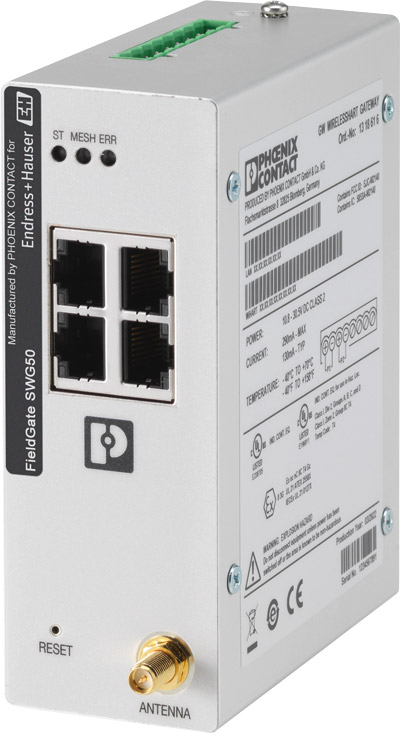
The Endress+Hauser FieldGate SWG50 is a compact WirelessHART gateway for securely connecting and monitoring multiple instruments, useful in several process and discrete manufacturing industries.
Jason Pennington, director of digital solutions at Endress+Hauser said that there are emerging trends within industry highlighted by TCP/IP-based communication networks, for example, PROFINET and EtherNet/IP.
“As advanced physical layer (APL) becomes more available and understood, we’re seeing smaller projects proliferate into areas of existing facilities aligned with migration of legacy networks, and even low-risk learning opportunities around non-critical operations,” Pennington said
“Most manufacturers are prioritizing greater data availability and accessibility. This can pertain to the host systems in terms of simplicity, or even leveraging security and network schemes to make operational data more available in real-time or near real-time to stakeholders throughout the enterprise,” he said. “We’ve seen some planning architectures go from multiple network types down to a single or dual strategy to better fit economics, integration, and plant learning requirements.”
He cited a simple example, where they have seen EtherNet/IP replace a myriad of analog/discrete and fit-for-purpose/boutique networks, consolidating instruments, actuators, and other field devices into a singular network that reports up to a host system. This makes daily life much simpler for operators, maintenance personnel, managers, and systems integrators.
Factory Connectivity Innovations
Pennington said that “AI is everywhere and, in many ways, it’s unavoidable. The key areas to watch are how usable it is for personnel, along with the philosophy or guide rails we, as an industrial community, establish for working with AI technology.”
Today, Endress+Hauser is leveraging several language models to write unique operation and efficiency playbooks, plus systematic failure mode and effect analysis documentation to complement what we can deliver in a uniquely contextual manner.
“We have also used unique monitoring-assist solutions from an innovative collaborator called AI-Ops to effectively add an extra set of eyes beyond sensors and control systems to analyze efficiencies, highlight anomalies, and create insights regarding unit operations,” he said.
Focus on Open Systems and Universal Connectivity
But also a need to provide solutions for legacy systems.
Bruce Cloutier, the CEO/Founder of INTEG (jnior.com) said that you may have heard the quote: “the good thing about standards is that there are so many to choose from!”.
“That is very true today and it was equally as pertinent 50 years ago. That quote gets attributed to different sources. I side with it being something that Ken Olsen said as I cut my teeth (so to speak) on a PDP-8 back in 1969 from his not so small company, Digital Equipment Corporation, better known as DEC,” Cloutier added.
Cloutier said that, no matter what you do, there is always somebody who thinks they can do it better. Through the years there has been an ongoing train of Protocol Dejour, often focused on specific industries (BACnet for instance). It is a constant battle, with end users looking to have choices of competitive products at competitive prices all easily dropped into their systems, and manufacturers all trying to control the user experience and the performance of the equipment they stand behind. Manufacturers are focused on developing the treasured customer loyalty, or lock in, but for users, open systems and universal connectivity is the Holy Grail.
“The fact is that new connectivity, as might be offered by OPC UA and MQTT, brings new opportunities to the industry. New ways, and perhaps better ways, to accomplish new goals,” Cloutier said. “But that does not address the billions already invested in legacy equipment. None of that should be relegated to the landfills. No factory should be forced to disrupt a functioning line in the name of connectivity.”
He said that the only real solution to these legacy equipment issues is an easy to use, reliable, and stable intermediary device that can make a legacy MODBUS device work seamlessly in the MQQT world. For reasons that should be obvious, we should not depend on Arduino or Raspberry Pi for protocol conversion in industrial environments, and even the typical PLC lacks the internal architecture and features to serve in that role generically.
AI connectivity advancements
“As for AI, consider that manufacturers rely on precise, accurate, and highly repeatable processes. AI is at best a statistical process, and by virtue of that it will be wrong and inaccurate from time to time. The popular term is hallucination,” Cloutier said. “But when that happens, if AI is inappropriately deployed, the results can be devastating, painfully apparent, and costly. That won’t be any hallucination.”
“To the extent that AI can be properly trained and deployed where its failures can be mitigated, it can be of great benefit,” he added. “Unfortunately, few understand what AI actually is, how it really works, and therefore know what they shouldn’t trust it to do.”